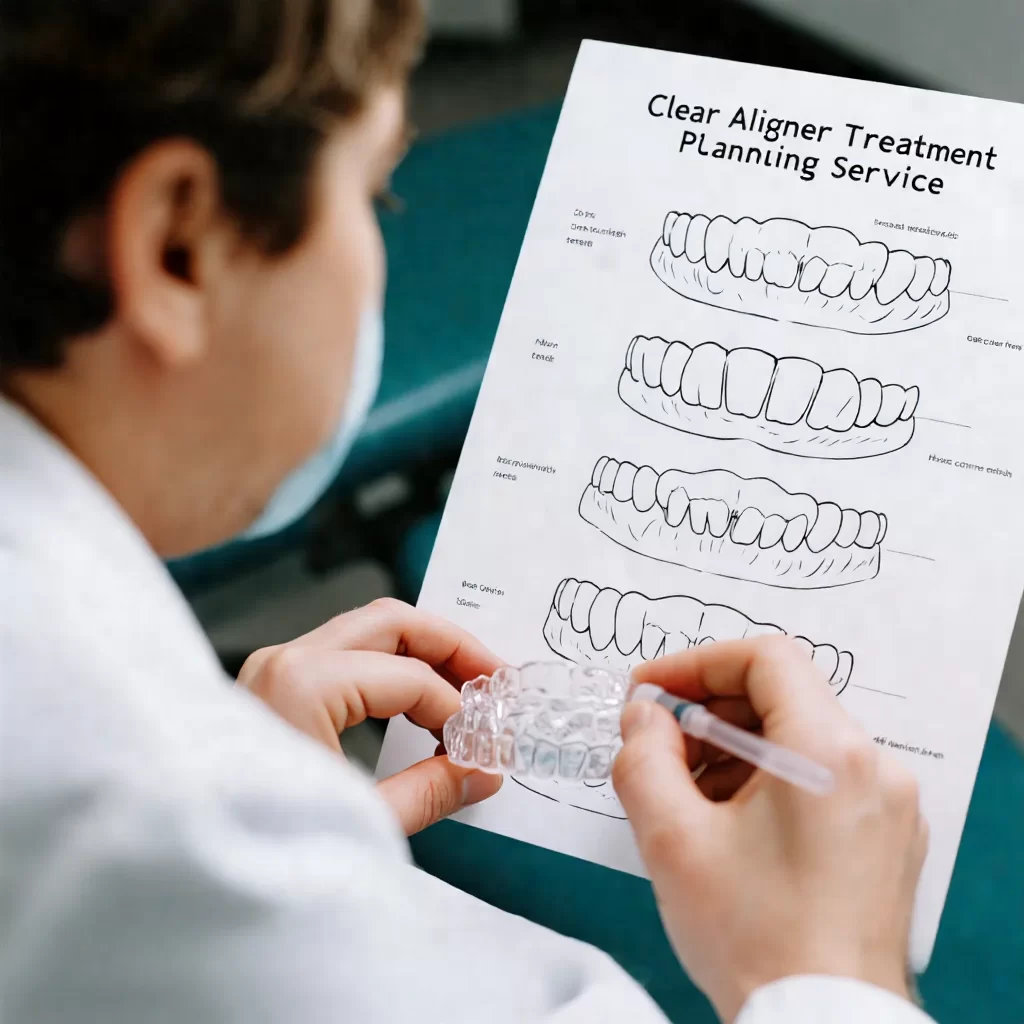
In discussions about AI, one question persists: will it replace clinicians?
In clear aligner therapy, some assume that increasingly intelligent software will eventually automate treatment planning entirely.
Those who have managed substantial case volumes know better. AI enhances efficiency; it does not replace clinical judgment.
1. AI Computes. It Does Not Diagnose.
AI excels at data analysis, automatic staging, and attachment optimization. Yet it cannot assess whether alveolar bone plate thickness permits planned tooth movement, nor can it reliably evaluate periodontal risk or anchorage stability. These remain fundamentally clinical determinations.
2. Outcomes Depend on Target Position.
An unreasonable target position, however precisely staged, remains unreasonable. Target setup is an exercise in clinical experience, not algorithmic output.
3. AI Does Not Comprehend Biomechanics.
Clear aligner therapy is, at its core, biomechanical control. Intrusion, torque expression, anchorage management, and expansion stability operate within a biological environment far more complex than any digital model.
4. The Future Is Human–Machine Collaboration.
Mature AI systems will delineate responsibility clearly: clinicians retain diagnosis and decision-making; AI executes standardized workflows and efficiency gains.
“AI does not simplify orthodontics. It makes complex workflows more efficient, and ensures that experienced clinical judgment is executed with greater consistency, most dentists using our AI clear aligner software for efficient clear aligner design and manufacturing and convenient patient communication”-said by Best Smile Tech’s CEO Halvin Han