Il monopolio di Invisalign: dove finiscono i tuoi profitti
Da oltre due decenni, Invisalign domina il mercato degli allineatori trasparenti. In qualità di dentista, probabilmente hai incentrato una parte significativa della tua attività ortodontica su questo marchio. I tuoi pazienti si fidano di questo marchio, il tuo staff conosce bene il flusso di lavoro e il tuo studio ha investito nell’ecosistema dello scanner iTero. Il materiale SmartTrack e il software ClinCheck di Invisalign hanno definito lo standard di settore per un movimento dentale prevedibile.
Tuttavia, questo predominio ha un costo. Il consolidamento del mercato da parte di Align Technology comporta una limitata flessibilità dei prezzi per i professionisti del settore odontoiatrico. Con un mercato globale degli allineatori trasparenti valutato a $4,22 miliardi nel 2025 e con una previsione di crescita fino a $13,29 miliardi entro il 2034, la domanda di alternative convenienti non è mai stata così elevata. Eppure molti dentisti si ritrovano vincolati a un rapporto con un unico fornitore che erode i loro margini di profitto anno dopo anno.
Il costo nascosto di Invisalign per il tuo studio
Diamo un'occhiata ai numeri. Le tariffe di laboratorio Invisalign per un caso completo partono in genere da $1.700. Per uno studio dentistico che applica una tariffa mediana di $3.500 per caso, ciò si traduce in un margine lordo di 50%. Una volta considerati i costi relativi al tempo clinico (circa $80 per appuntamento, per un totale di 8-12 visite), l’utile netto per caso si attesta intorno a $1.200.
Consideriamo ora i pazienti che decidono di rinunciare. Ogni mese, potenziali pazienti lasciano il vostro studio perché il preventivo per Invisalign supera il loro budget. Altri rifiutano il trattamento quando scoprono di dover attendere da quattro a sei settimane per ricevere il primo set di allineatori. Questi casi persi non rappresentano solo un mancato guadagno, ma pazienti che cercheranno un trattamento altrove, spesso rivolgendosi a marchi che si rivolgono direttamente al consumatore e che aggirano completamente la supervisione odontoiatrica professionale.
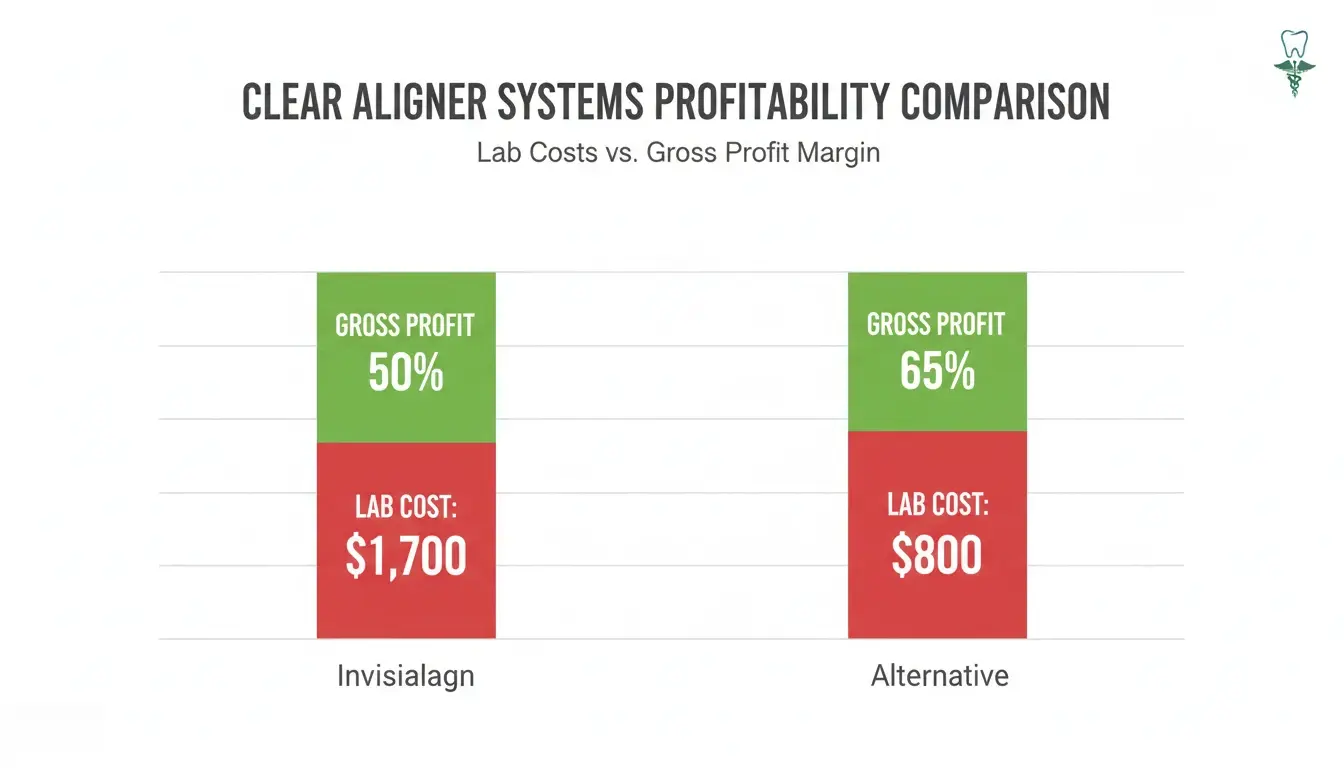
I vantaggi economici derivanti dall’introduzione di un’alternativa a costo ridotto sono convincenti. Un sistema di allineatori alternativo di qualità, con costi di laboratorio pari a $1.000 per caso, può far salire i vostri margini lordi da 55% a 70%, pur mantenendo un’assistenza professionale sotto la supervisione del dentista. Ciò significa un profitto aggiuntivo compreso tra $300 e $600 per caso, senza compromettere gli standard clinici.
Cosa cercare in un'alternativa a Invisalign
Scegliere un'alternativa a Invisalign non significa semplicemente trovare l'opzione più economica. La vostra reputazione dipende dai risultati del trattamento. L'alternativa giusta deve garantire risultati equivalenti o superiori sotto diversi aspetti fondamentali.
Qualità degli allineatori e pianificazione del trattamento
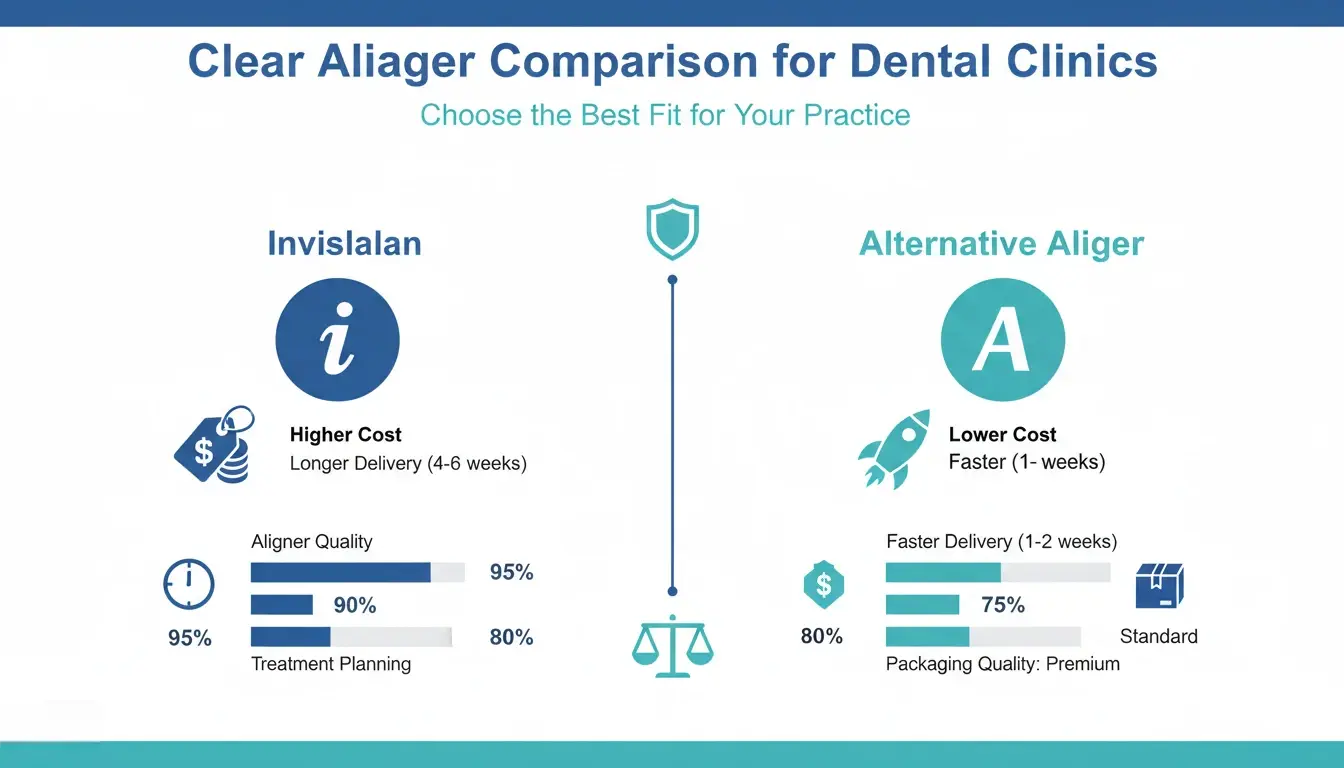
Innanzitutto, il materiale degli allineatori deve essere efficace. È importante scegliere polimeri termoplastici di grado medico, certificati FDA o CE, con comprovate caratteristiche di applicazione della forza. Gli allineatori dovrebbero esercitare una pressione costante e delicata su tutta la superficie del dente, non solo sulla corona. Nei casi da moderati a complessi, questa precisione diventa ancora più fondamentale.
La qualità della pianificazione del trattamento distingue i sistemi di livello professionale dalle offerte rivolte direttamente al consumatore. Il fornitore alternativo dovrebbe avvalersi di ortodontisti abilitati che esaminino ogni singolo caso, non solo di algoritmi automatizzati. Il loro software di pianificazione 3D dovrebbe consentire di modificare i movimenti dei denti, aggiungere attacchi e pianificare la riduzione interprossimale con la stessa precisione che ci si aspetta dalla piattaforma ClinCheck di Invisalign.
Anche la confezione è importante. Una confezione professionale, con etichette chiare, istruzioni di inserimento dettagliate e materiali di conservazione adeguati, riflette l’attenzione ai dettagli del produttore. I vostri pazienti notano questi dettagli, che influenzano il valore percepito del prodotto.
Velocità di consegna e piattaforma cloud
Una delle lamentele più comuni riguardo a Invisalign riguarda i tempi di consegna. Di norma, trascorrono dalle quattro alle sei settimane dalla scansione alla spedizione del primo allineatore. Per i pazienti ansiosi di iniziare il trattamento, questo ritardo può rappresentare un motivo di rinuncia. Un’alternativa di qualità dovrebbe garantire la consegna entro una o due settimane, consentendo di trasformare più rapidamente le visite di consulenza in trattamenti effettivi.
Altrettanto importante è la piattaforma di comunicazione basata su cloud. Il sistema alternativo dovrebbe fornire un portale sicuro e conforme alla normativa HIPAA, dove sia possibile caricare scansioni intraorali, monitorare lo stato di avanzamento dei casi, comunicare con il team di pianificazione e scaricare i file relativi ai trattamenti. Funzionalità quali gli aggiornamenti in tempo reale sullo stato dei casi, i flussi di lavoro digitali per l’approvazione dei piani di trattamento e gli strumenti di monitoraggio dei progressi dei pazienti ottimizzano le operazioni dello studio.
Il passaggio: una decisione strategica
Aggiungere al proprio studio un’opzione di allineatori trasparenti a costo ridotto non significa sostituire completamente Invisalign. Si tratta piuttosto di ampliare la propria offerta terapeutica per soddisfare le esigenze di una base di pazienti più ampia. Consideratela come l’offerta di opzioni sia premium che standard, proprio come potreste offrire diverse marche di prodotti per lo sbiancamento o di impianti.
Inizia individuando il tuo segmento di pazienti sensibili al prezzo. Si tratta di pazienti che desiderano un trattamento ortodontico professionale ma sono scoraggiati dal costo di Invisalign. Molti sono adulti tra i 20 e i 30 anni, che pagano di tasca propria senza una copertura assicurativa completa. Offrire loro un’alternativa sotto la supervisione del dentista a un costo compreso tra $3.000 e $4.500, anziché perderli a favore di un prodotto venduto direttamente al consumatore a $1.900, rappresenta un vantaggio sia per il vostro studio che per la loro salute orale.
Iniziate con un periodo di prova. Scegliete alcuni casi semplici, magari con problemi di affollamento o spaziatura da lievi a moderati, per valutare il flusso di lavoro del sistema alternativo, l’adattamento degli allineatori e i risultati del trattamento. Una volta che voi e il vostro team avrete acquisito fiducia nel prodotto, estendete gradualmente l’utilizzo a casi più complessi, comprese rotazioni moderate e movimenti verticali.
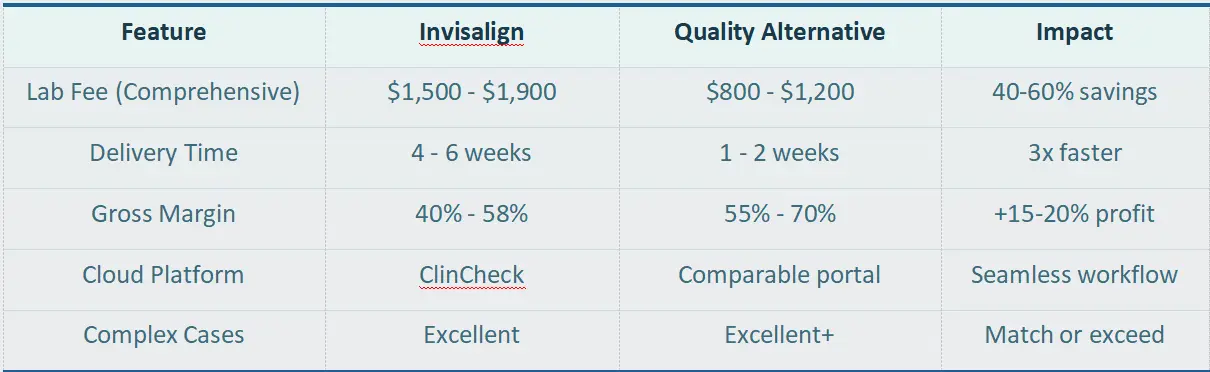
•Risparmio sui costi compreso tra 40% e 60% sulle spese di laboratorio rispetto a Invisalign
• Tempi di consegna da 1 a 2 settimane rispetto a 4-6 settimane
•Risultati paragonabili o superiori nei casi moderati e complessi
• Piattaforma cloud professionale per la gestione dei casi e la comunicazione
• Maggiore flessibilità nei prezzi per attirare i pazienti sensibili al prezzo
Il mercato degli allineatori trasparenti sta evolvendo rapidamente. I brevetti di Invisalign sono scaduti e nuovi produttori stanno entrando nel mercato con prodotti competitivi. In qualità di professionista del settore odontoiatrico, oggi hai a disposizione più scelta che mai. Scegliendo con cura un’alternativa di qualità che soddisfi i tuoi standard clinici, puoi aumentare la redditività, ridurre i tempi di attesa dei pazienti e servire una comunità più ampia, il tutto mantenendo il controllo professionale che garantisce risultati sicuri e prevedibili.
I vantaggi dell'alternativa offerta dal produttore di allineatori trasparenti OEM
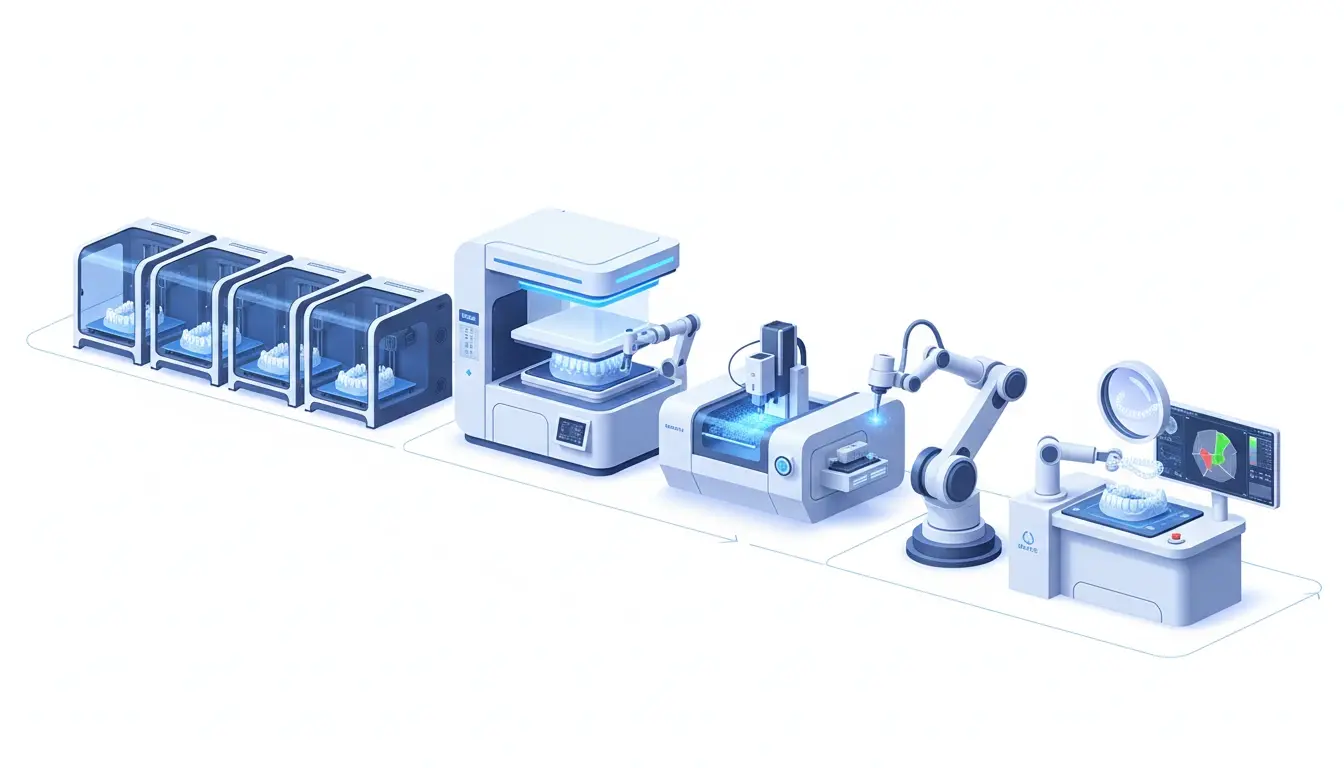
I produttori OEM affermati di allineatori trasparenti rappresentano un’alternativa interessante. I principali fornitori OEM provenienti dalla Cina, dagli Stati Uniti e dall'Europa occidentale hanno investito massicciamente in sistemi di produzione automatizzati end-to-end. I loro stabilimenti gestiscono in genere linee di produzione che spaziano dalla selezione di materiale in fogli a tre strati di alta qualità alla stampa 3D ad alta risoluzione, alla termoformatura di precisione, al taglio con laser o robot CNC e alla lucidatura automatizzata.
Un aspetto fondamentale è che questi produttori si avvalgono di ortodontisti esperti che esaminano e approvano personalmente ogni piano di trattamento. Questo controllo umano garantisce che i casi moderati e complessi ricevano l’attenzione biomeccanica di cui hanno bisogno. La combinazione di una progettazione esperta e di una produzione automatizzata consente di ottenere allineatori con linee di finitura uniformi, distribuzione omogenea dello spessore ed eccellente trasparenza ottica.
Per il vostro studio, la collaborazione con un produttore OEM vi consente di commercializzare con marchio proprio un prodotto che eguaglia o supera la qualità fisica di Invisalign, a una frazione del costo di laboratorio, con il vostro marchio sulla confezione. Mantenete il pieno controllo clinico, avendo al contempo accesso a capacità produttive di livello industriale che i fornitori locali semplicemente non sono in grado di eguagliare.