If you have spent any time sourcing third-party treatment planning for your clear aligner brand, you have noticed something: the range in pricing is hard to ignore. One provider comes in at a rate that feels like an easy decision. Another quotes noticeably higher — sometimes double or more. Same basic service description. Same file outputs.
So what justifies the difference?
Maybe you have asked yourself that question. Maybe you have even gone with the more affordable option, reasoning that you could always reassess later.
This article is about what the per-case fee alone cannot tell you — and why, in treatment planning, the price you see upfront is rarely the price you end up paying.
First, Let’s Agree on Something
Before we compare pricing models, it is worth stating a principle that applies to professional services across every industry — and treatment planning is no exception.
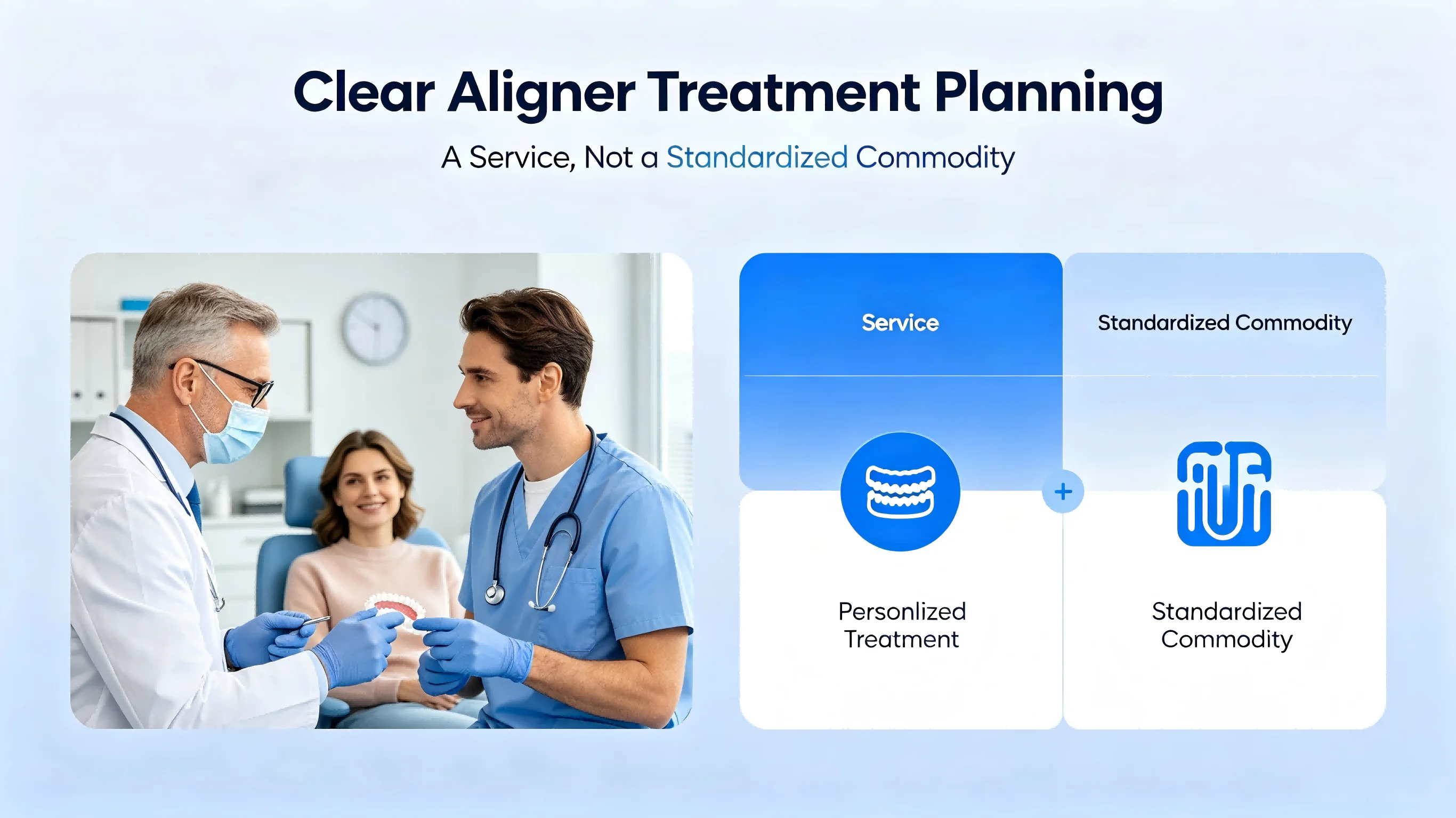
Clear aligner treatment planning is a service, not a standardized commodity.
This means two things are true at the same time:
A higher price does not automatically guarantee better service. You can pay a premium and still receive mediocre work. Price alone is not a reliable indicator of quality, and we have all seen expensive providers who fail to deliver.
But a price that is significantly below market is almost never a sign of superior efficiency. It is a signal of corners being cut somewhere — in talent, in tools, in time spent per case, or in accountability when things go wrong.
This is not a moral judgment. It is a structural reality. Quality professional service costs money to produce. When the price is too low to support that production cost, the math has to balance somewhere else. The question is not whether compromises are being made — it is where, and whether you will feel them before or after the patient starts treatment.
With that principle in mind, let us look at what is actually happening behind two very different approaches to pricing in the TPS market.
Two Prices, Two Completely Different Businesses
The gap between a low-cost provider and a quality-focused one is not about one being greedy and the other efficient. It reflects two fundamentally different cost structures, two different promises, and two different definitions of what “done” means.
The low-cost provider is not simply a leaner version of the higher-priced one. They are playing a different game entirely — one where the economics only make sense if you stop looking at the per-case invoice and start tracking what happens over the full lifetime of a patient’s treatment.
Inside the Low-Cost Model: Where the Cuts Happen
When a TPS provider competes primarily on price, the economics force cuts in three predictable areas. None of them are visible in a sales pitch, but all of them show up in your clinical outcomes.
1. Labor without clinical judgment
The people building your setups are not orthodontically trained. They are entry-level software operators who sit in front of a screen and accept whatever the automated algorithm generates. They are not evaluating root position, anchorage demands, or force vectors — because they were never taught to. They are moving digital teeth, not planning treatment. The difference is invisible in an STL file. It becomes painfully visible months later in a patient’s mouth.
2. Software without safeguards
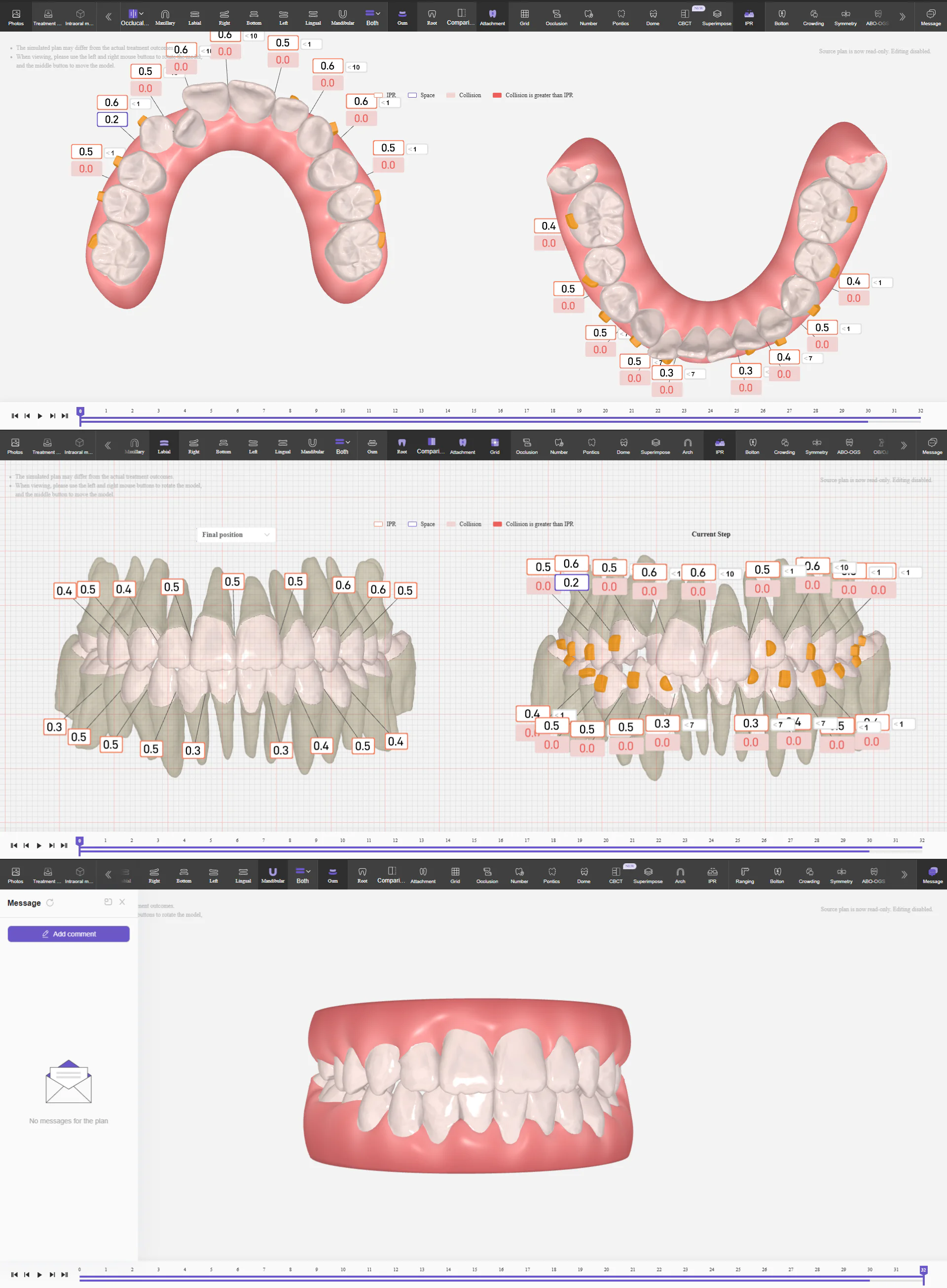
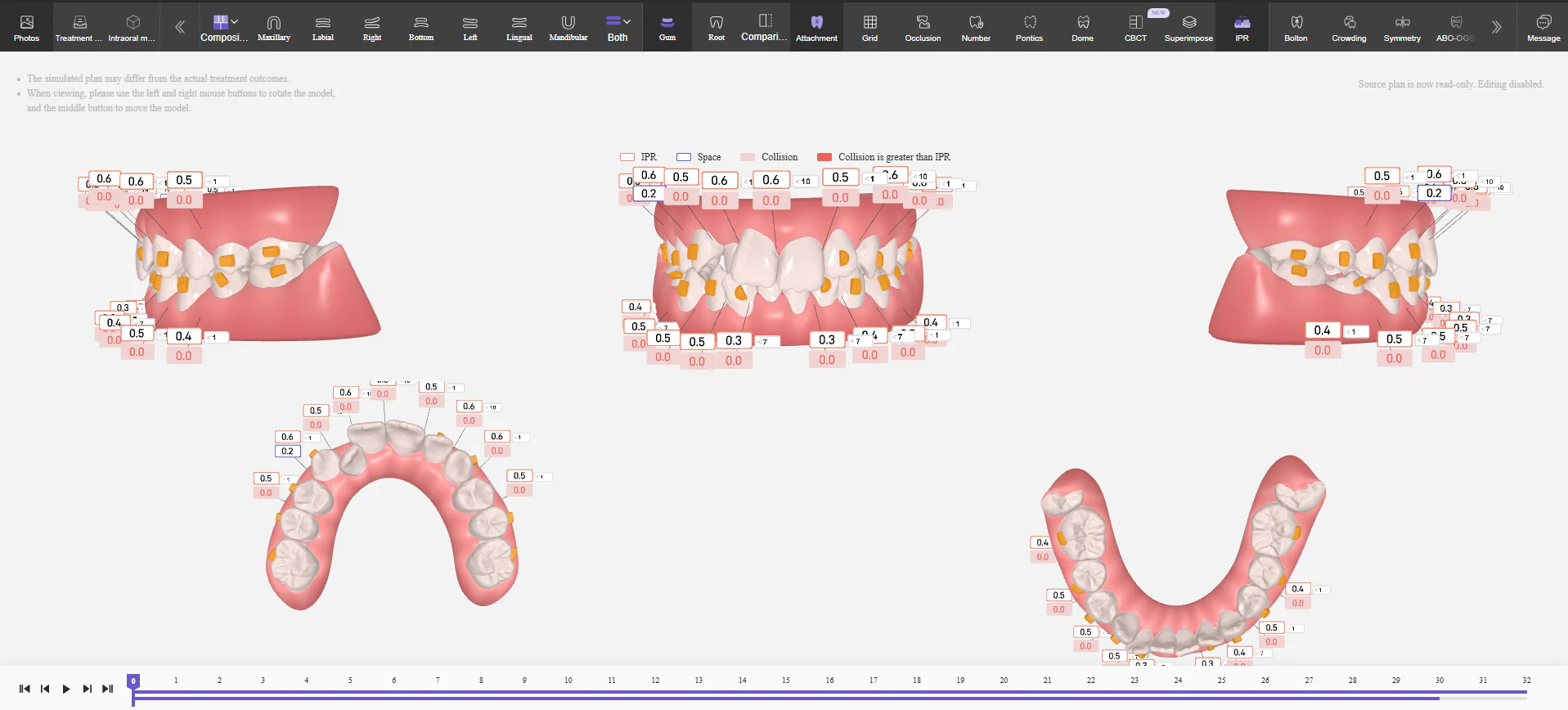
Some powerful rule-based orthodontic design software — such as 3Shape and OnyxCeph — comes with significant annual licensing fees. Meanwhile, unauthorized or lower-cost versions of them circulate at a fraction of the price. But here is what the price tag does not tell you: these tools, capable as they are, place an enormous burden on the designer. Producing consistently good clear aligner designs requires a level of clinical judgment and experience that the software itself cannot provide, especially for moderare and compex cases.
3. Auto-pilot workflow
The technician makes surface-level tweaks: smoothing an aligner margin, adjusting a display angle. They do not question the clinical logic of the plan because that is not their job description. Why a particular movement was generated, whether it risks tipping a root instead of bodily moving it, what the cumulative force load means for long-term periodontal health — none of this enters the workflow.
For very simple cases — mild anterior crowding, no extractions, no bite involvement — this model can work. The case is forgiving enough to absorb the imprecision.
But introduce moderate complexity: a deep bite, an extraction case, a mid-course correction. Suddenly, the design accumulates biomechanical errors that are invisible in the digital preview and undetectable to the technician who built it.
The Hidden Math: How One Case Becomes Several Bills
Here is where the business model actually operates.
A flawed design rarely looks flawed during the digital review. The doctor — busy, trusting, maybe without the time or specialized training to audit every root position — sees a setup that looks reasonable. They approve it. Aligners ship. The patient starts.
Then the refinement cycle begins.
Round one. Round two. Maybe round three.
Each round is a new billable design. What entered the books as a single case fee has now multiplied. I have spoken with brand founders who tracked their actual average cost over a year of cases and found the real number was nowhere near the advertised rate. When they honestly accounted for refinements, restarts, and wasted chair time, the figure was often several times higher than expected.
And the non-financial costs pile up in parallel. Patients wear aligners for extra months. Doctors burn uncompensated time on troubleshooting. Your brand — the one you spent years and capital building — absorbs a slow, quiet erosion of trust that no amount of marketing can quickly undo.
When the complaints reach a critical mass, one of two things happens. The provider disappears, rebrands under a new domain and logo, and re-enters the market with the same too-good-to-be-true pricing. Or they stay, and you remain locked in a cycle of low-quality outputs and mounting hidden costs. Either way, you lose.
A Different Model: Designing It Right the First Time
At Best Smile Tech, our fees sit at a higher level because our cost structure is genuinely different. We do not take the same product and add margin. We build an entirely different product, on an entirely different foundation.
Clinically trained designers.
Our team members come with training in root anatomy, anchorage biomechanics, and attachment design. When they evaluate a digital setup, they are looking past crown position to what is happening beneath the gingiva — root proximity, force vectors, staging logic, periodontal constraints. They can tell you why a plan will or will not translate clinically.
Clinical-grade software.
Our clear aligner design software is powered by AI trained on over 100,000 datasets — including CBCT data — with validated capabilities in root simulation, collision detection, and force analysis. These are not cosmetic features designed to make a plan look polished on screen. They are diagnostic tools that reveal what crown position alone cannot: the biomechanical reality beneath the gingiva.
Clinician-led workflow.
The process runs in the right direction. A designer makes clinical judgments first. The software validates, supports, and executes. When the software proposes something biomechanically questionable, the designer overrides it — not the other way around.
The objective is straightforward: design it right the first time. When you do that, everything downstream changes. Fewer refinement rounds. Less chair time wasted. Lower total cost over the life of the case — even when the initial design fee is not the cheapest on the market. And a partnership that grows stronger over hundreds of cases because it is built on reliability, not transaction volume.
The Total Cost View
When I talk with brand founders about their TPS spend, I encourage them to track more than the per-case design fee. Here is how the two models compare when you widen the lens:
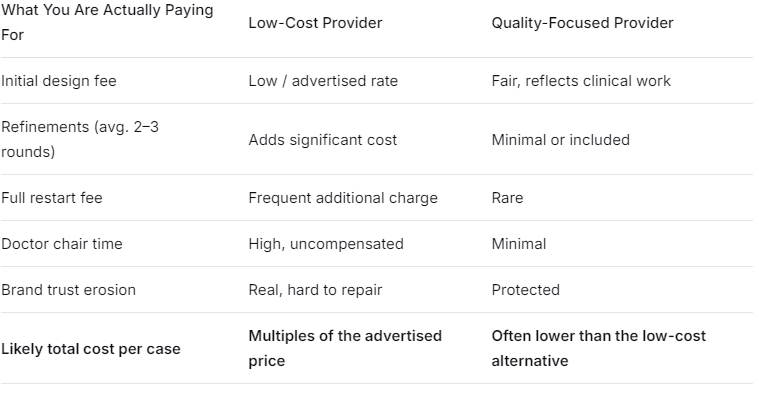
Price is not the number on the first invoice. It is the number you land on when the case closes — if it closes cleanly at all.
The Error That Waits Over a Year to Surface
There is one more dimension that deserves your full attention, because it is the one that separates experienced brand founders from those about to learn a very expensive lesson.
The most dangerous design errors are not the ones you spot during setup review. They are the ones that remain invisible for 12 to 24 months.
A force sequence that looks smooth in the animation but progressively overloads a periodontal ligament. An attachment that tips a root instead of controlling it. A subtle occlusal shift that goes unnoticed until the patient reports pain, mobility, or worse.
By the time these problems present clinically, the low-cost provider is frequently unreachable. The domain has expired. Messages go unanswered. And you — the brand owner — are left holding every clinical, financial, and legal consequence.
I have seen this cycle enough times now to recognize its shape from a distance: A brand without the in-house clinical depth to audit designs independently. A low-cost provider that delivers a setup that “looks fine.” An approval. Months of apparent progress. Then complications. The provider is gone. The doctor blames you. The patient demands answers — or legal recourse.
Everyone loses except the TPS provider, who was paid long before the first complication appeared.
Why This Matters for Your Business
If you are building a clear aligner brand, you are not just selling plastic trays. You are selling clinical outcomes, patient trust, and professional reputation. Every single case either strengthens that foundation or chips away at it.
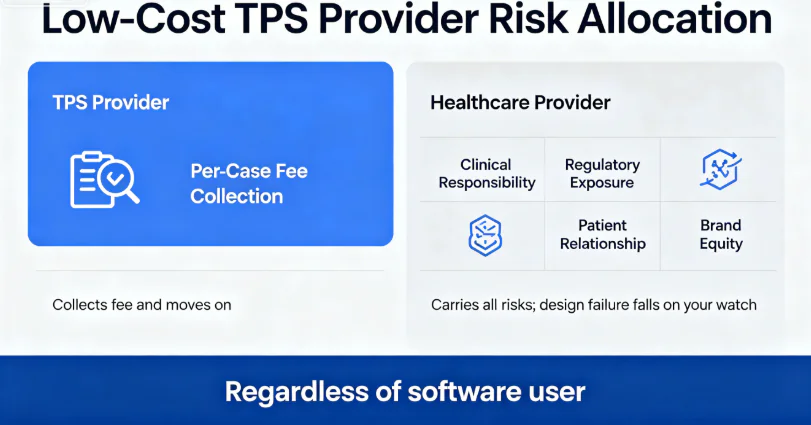
A low-cost TPS provider does not share that risk with you. They collect a per-case fee and move on. You carry the clinical responsibility, the regulatory exposure, the patient relationship, and the brand equity. When the design fails, it fails on your watch — regardless of who clicked the buttons on the software.
This is not an argument against being cost-conscious. It is an argument against confusing the price of a design with the cost of a case. They are not the same thing. In this industry, they rarely even correlate.
What to Look for in a TPS Partner
As you evaluate your options, here are four questions worth asking any provider — including us:
–Do your designers have genuine orthodontic training, or are they primarily software operators?
–Does your software validate biomechanics, or does it only visualize crown position?
–Is your pricing structured to support doing the job thoroughly the first time?
–When something goes wrong, will you still be here — and will you stand behind your work?
The answers will tell you which model you are really dealing with, regardless of what the website says.