The clear aligner market is booming, and competition with giants like Invisalign and Angel Aligner is fierce. For orthodontic resellers and clear aligner distributors looking to build their own brand, success starts with one critical decision: choosing the right OEM clear aligner manufacturer as your partner. This guide walks you through the essential steps to launch a competitive private-label aligner brand that can stand pair-to-pair with industry leaders.
1. Partner with a Full-Service OEM Clear Aligner Manufacturer
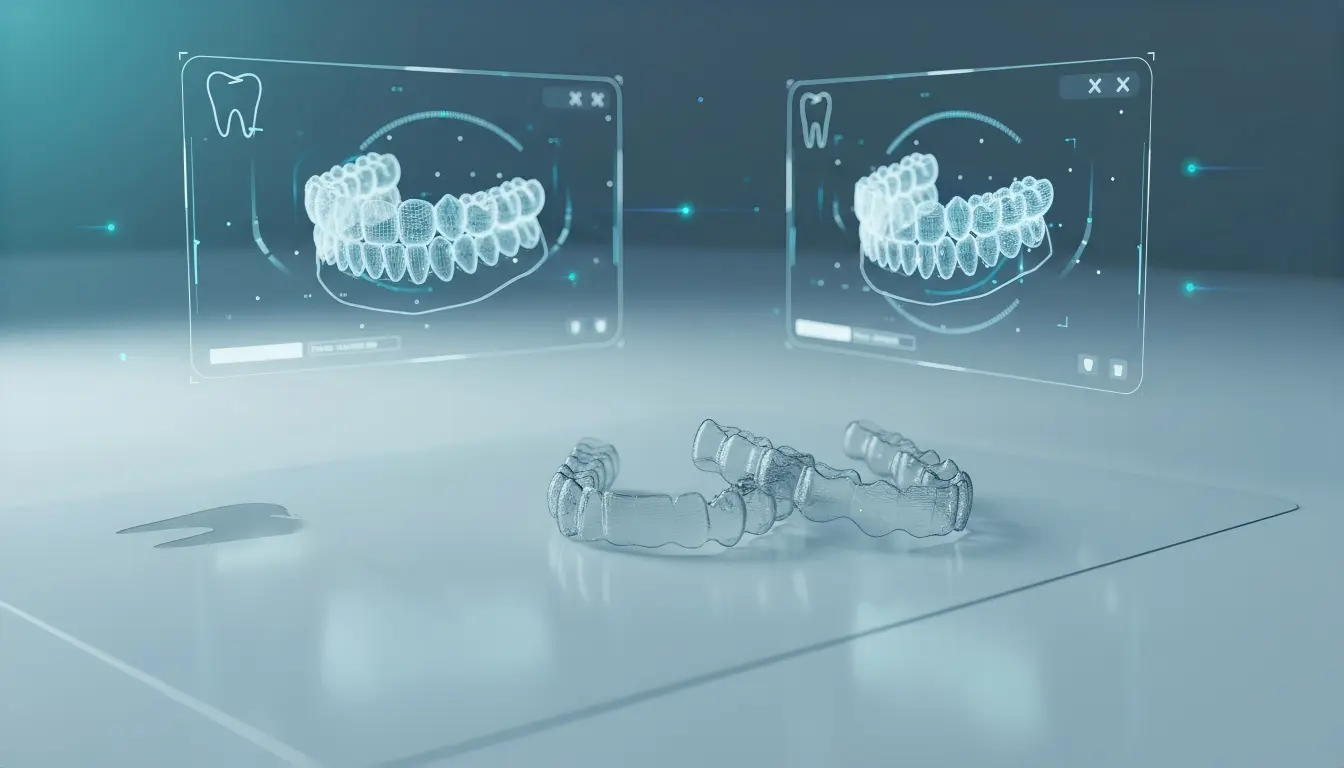
Your OEM partner should do far more than fabricate plastic trays. Look for a manufacturer that offers end-to-end capabilities: AI-powered treatment planning, experienced orthodontic design teams, premium medical-grade materials, and scalable production. A true one-stop partner handles both design and manufacturing under one roof, which simplifies quality control, reduces communication friction, and ensures consistent clinical outcomes.
Key capabilities to evaluate include: AI-native clear aligner design software for precision and speed; a one-designer-per-case workflow (as opposed to fragmented assembly-line design) for treatment plan integrity; premium three-layer medical-grade polymer sheets for consistent orthodontic force and patient comfort; and fast turnaround — ideally treatment plan delivery within 48 hours so you can start patients sooner.
2. Leverage an AI Cloud Platform for Seamless Communication
Modern clear aligner success depends on efficient digital workflows. Your OEM partner should provide an AI clear aligner design cloud platform that connects everyone in the treatment chain. Dentists can submit cases, review 3D treatment simulations, approve plans, and manage all their patients through a single web portal — no software installation required.
Critically, the platform should also enable patient engagement. Dentists can share visual treatment previews with patients, explain expected outcomes intuitively, and communicate plan details directly. This closed-loop ecosystem — from case submission through treatment monitoring to patient communication — dramatically improves operational efficiency and patient satisfaction. Multi-location support is a valuable bonus for chain clinics and growing practices.

3. Ensure Treatment Effectiveness — The 60/20/20 Principle
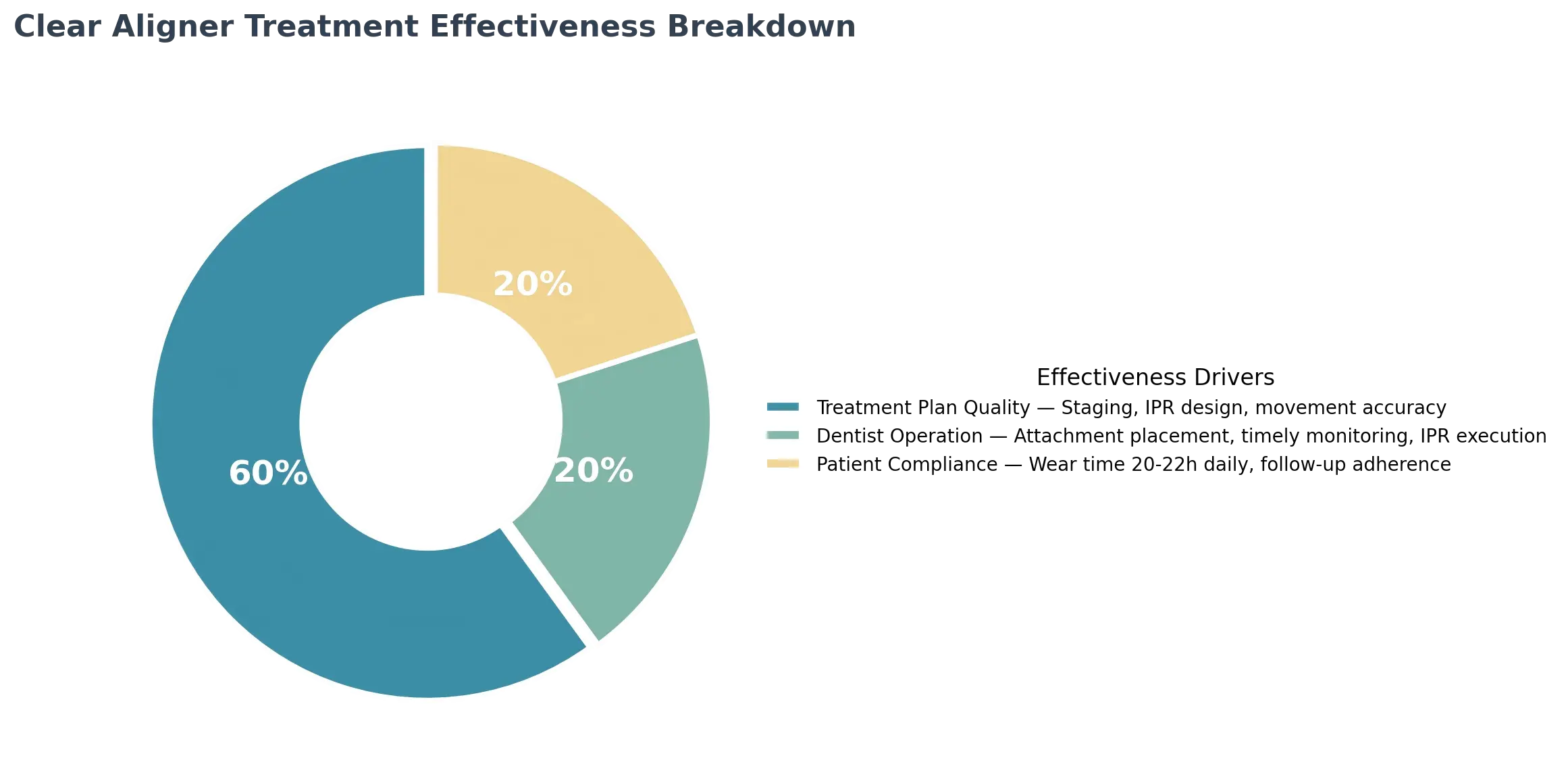
To compete long-term with established brands, your aligner system must deliver proven clinical results. Research and extensive case data reveal that clear aligner treatment effectiveness follows a clear formula: the treatment plan quality accounts for 60% of success, dentist operations contribute 20%, and patient compliance makes up the remaining 20%.
Treatment Plan Quality (60%) — The Foundation of Success
The treatment plan is the single most important factor, especially for moderate and complex cases. This includes precise staging, accurate IPR design, movement planning, and attachment strategy. A superior plan, designed by experienced orthodontic specialists using advanced AI software, can achieve predictable tooth movement while avoiding extractions and bone screws even in complex cases. This is where your OEM partner’s expertise directly determines your brand reputation.
Dentist Operation (20%) — Clinical Execution Matters
Even the best plan requires skilled execution. Timely patient monitoring, precise attachment placement, and accurate IPR execution are essential. Dentists should verify attachment placement against the plan, execute IPR precisely per the report, and scan for refinements at the first sign of deviation. Providing your dentist network with clear clinical protocols and ongoing training is a worthwhile investment.
Patient Compliance (20%) — Managing the Human Factor
Patient adherence is the final piece of the puzzle. The most critical factor is wear time — patients must commit to 20-22 hours of daily aligner wear. Equally important is treatment duration: patients have the best compliance during the first 1-2 years and gradually lose patience as treatment extends longer. Reducing refinements is therefore crucial — not just for efficiency, but for maintaining patient motivation. Shorter treatment cycles with fewer refinements lead to better outcomes and higher patient satisfaction.
4. Build a Brand That Competes with Industry Leaders
Competing with Invisalign and Angel Aligner requires differentiation on both technology and service. Position your brand around what matters most to dentists and patients: faster treatment times (achieved through superior materials that enable 10-day wear intervals instead of 14 days), complex case expertise that other brands cannot handle, personalized service with direct designer communication, and transparent pricing without hidden refinement costs.
Staged delivery is another competitive advantage. Rather than producing all aligners upfront, deliver in batches of 5-10 sets for moderate and complex cases. This enables early intervention, cost control, and mid-course correction based on actual patient response — a strategy that leading brands are already adopting.
Conclusion
Launching your own clear aligner brand is an achievable goal when you have the right OEM partner. Focus on three pillars: a full-service manufacturer with AI design capabilities and premium production quality, a cloud-based digital platform that connects you, dentists, and patients seamlessly, and an unwavering commitment to treatment effectiveness through superior planning, clinical support, and patient compliance tools. With these foundations in place, your brand can earn the trust of dentists and patients alike — and compete confidently with the industry’s biggest names.