In digital orthodontics, thermoformed clear aligners have long held the dominant position. Now, a new approach—direct 3D printing—is attempting to reshape the landscape. While direct-printed aligners still face challenges in mechanical strength and biocompatibility for some products, their unique advantages in chairside immediate delivery and early childhood orthodontics make them an emerging force that cannot be ignored.
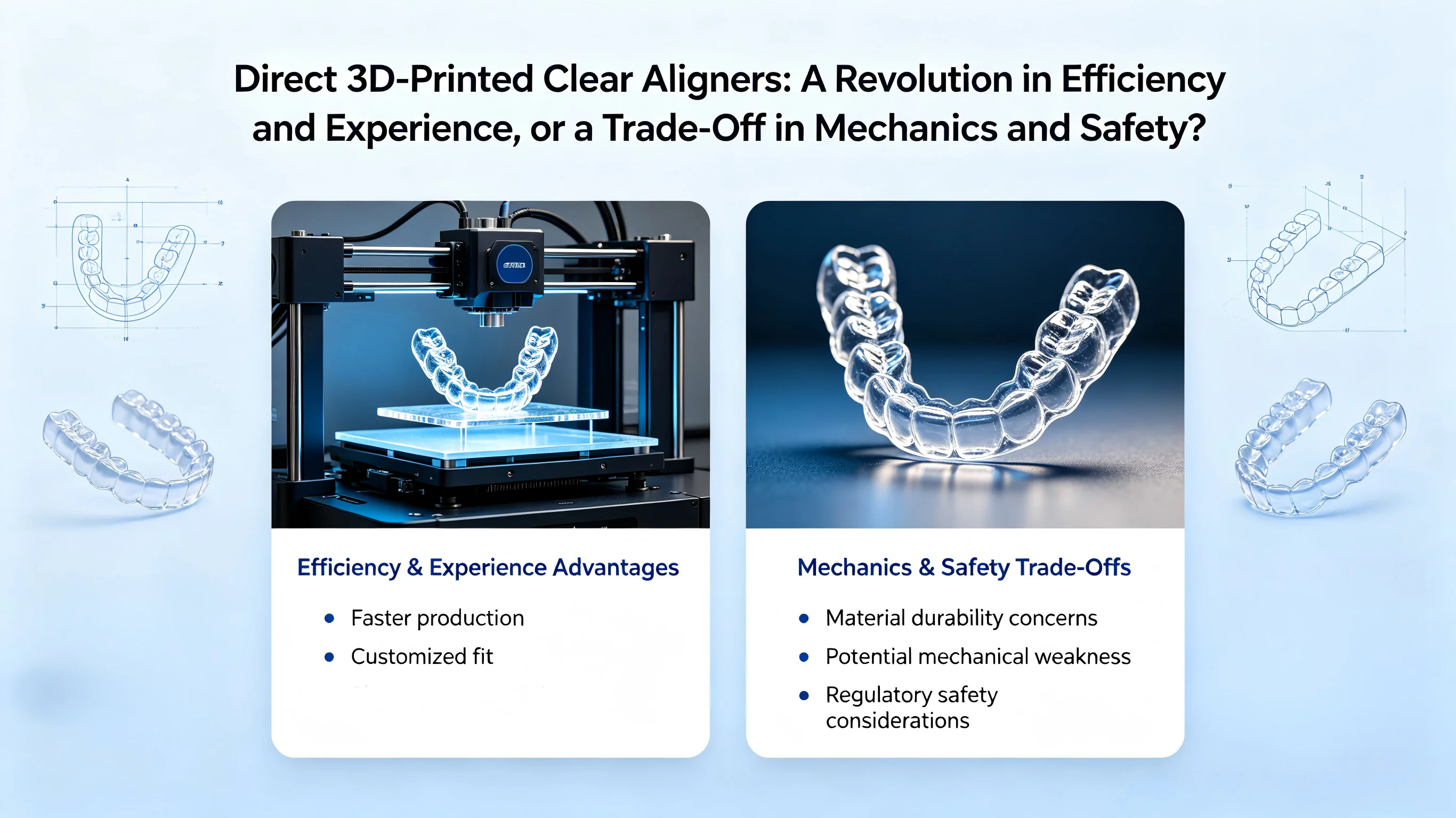
Technical Challenges: The Material Performance Hurdle and Safety Considerations
When discussing direct-printed aligners, it is essential to first acknowledge their current limitations. Conventional thermoformed aligners are typically fabricated from multi-layer polymer sheets (PETG, TPU, etc.) via high-pressure heating. This process creates a denser molecular chain orientation, offering high tear resistance and elastic modulus. In theory, the fatigue strength and yield strength of photo-cured direct-printed resins may not yet match those of optimally processed thermoformed products—a gap that becomes particularly evident in complex cases involving rotational movements or root torque.
However, an in vitro study published in 2025 reveals a more nuanced picture: the performance variation among different direct-printed materials can be greater than the overall difference between direct printing and thermoforming. In that study, Graphy material (GY) achieved surface roughness, color stability, and bacterial adhesion levels comparable to thermoformed materials. This suggests that rather than making sweeping judgments about the entire technology, it is more accurate to say that “significant differences exist among direct-printed aligner products.”
Regarding biocompatibility, the core challenge for direct-printed resins lies in the potential residual of unpolymerized monomers. A 2025 toxicological study found that direct-printed Graphy aligners did not leach bisphenol A over 72 hours, but the total amount of leachable compounds was indeed higher than that of certain traditional thermoformed products. Notably, this issue is not unique to direct-printed aligners—any photo-cured resin used in the oral cavity (including those for printing dental models) faces the same safety challenges. With continuous material formulation optimization and standardized curing protocols, this concern has been progressively mitigated. For instance, LuxCreo’s DCA resin has received both FDA Class II 510(k) clearance and EU MDR CE Class IIa certification, demonstrating that under rigorous regulatory frameworks, direct-printed materials can achieve recognized safety status. Therefore, a more precise statement is: different brands of direct-printed materials vary significantly in mechanical properties and biosafety; clinical selection should prioritize products with established regulatory certifications.
The Transformative Advantage: A Chairside Experience Revolution
Despite the technical hurdles still to be overcome, the user experience of direct-printed aligners in chairside applications has already surpassed that of traditional workflows—and this is the core logic driving their market entry.
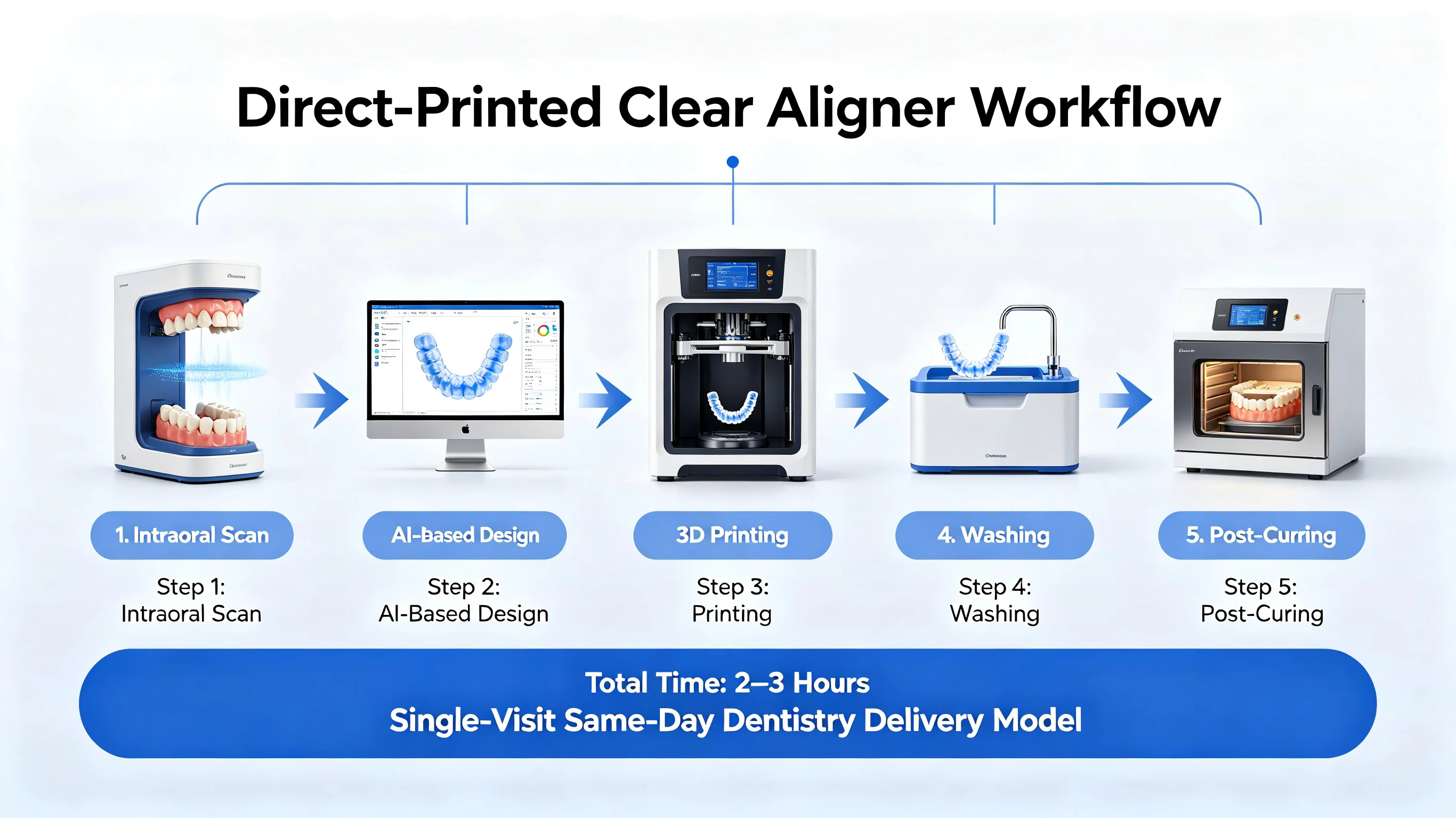
Turnaround time. Traditional workflows typically take 5–10 business days: after impression or intraoral scanning, the case is sent to a lab for model printing, thermoforming, trimming, polishing, and mailing. In contrast, a direct-printed workflow—intraoral scan, AI‑based design, printing, washing, and post‑curing—can be completed within 2–3 hours. This compresses multiple patient visits into a single‑visit, same‑day delivery model. For patients with poor compliance or those living in remote areas, this dramatically reduces treatment discontinuation rates.
Design freedom. Direct printing allows full‑area variable thickness design in a single aligner—thicker zones for targeted force delivery, thinner zones for patient comfort. Such precision is nearly impossible with thermoforming. Moreover, bite ramps, elastic hooks, pressure bumps (for retention), and power ridges (for root torque) can be directly integrated into the aligner itself, partially or completely replacing traditional composite resin attachments. Material innovations further enhance clinical performance: LuxCreo’s ActiveMemory™ polymer can be activated by warm‑water soaking before delivery to restore original geometry and mechanical properties; Graphy’s Tera Harz TC‑85 resin automatically recovers its as‑printed geometry at oral temperature. These advances are progressively closing the performance gap between direct printing and thermoforming.
Market Landscape: From Scarcity to a Diversified Solution Map
The direct-printed aligner market remains at an early stage, but the competitive landscape is beginning to take shape. It is important to note that two conceptually different “direct‑printing” paths exist in industry discussions: true direct printing of the aligner shell using biocompatible resin, versus printing only the model followed by conventional thermoforming. The former represents the core direction of this technology.
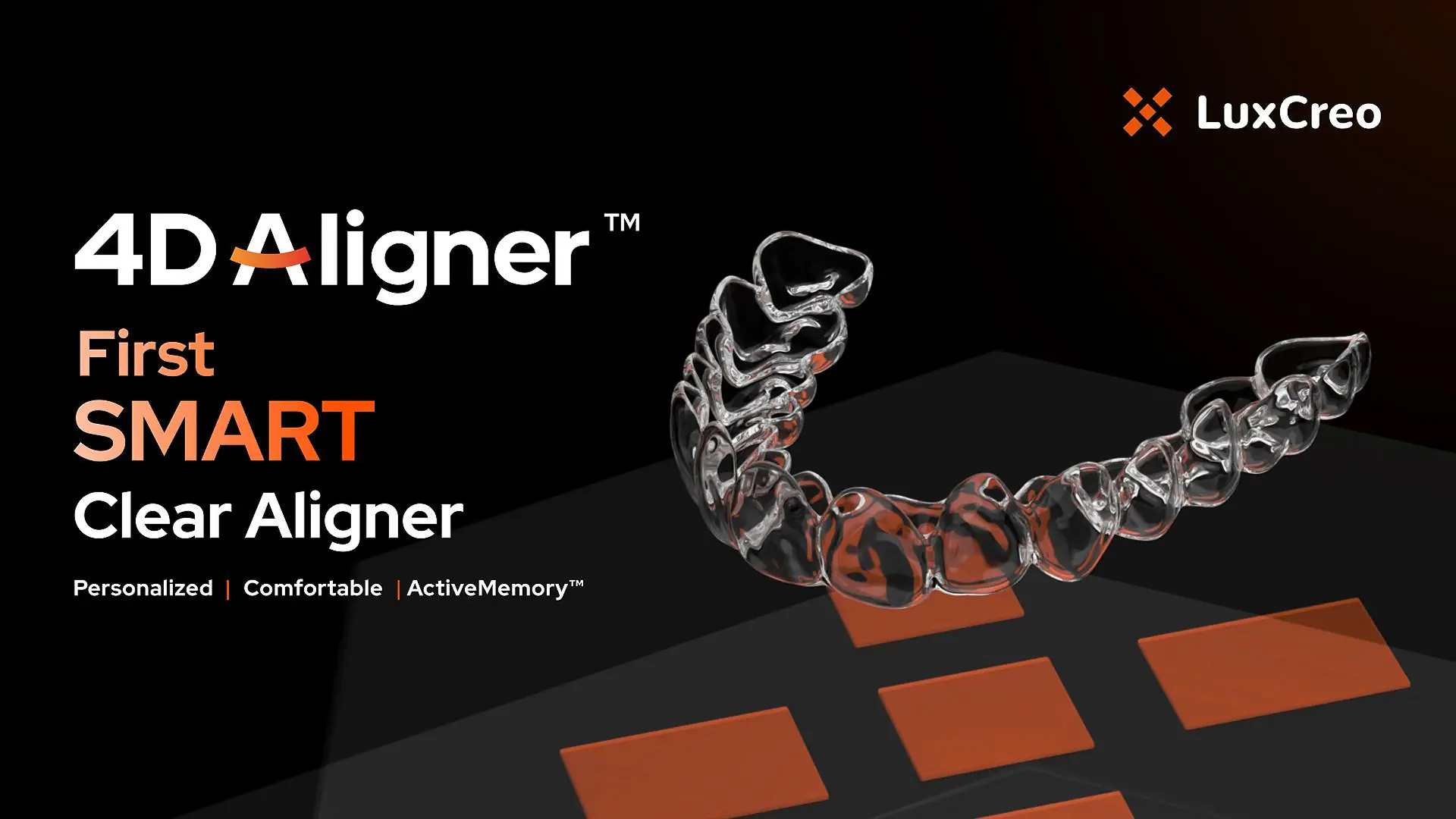
LuxCreo is the most commercially advanced player in true direct printing. Its 4D Aligner™ was the world’s first direct‑printed aligner to receive FDA Class II 510(k) clearance, and it is also the first to obtain EU MDR CE Class IIa certification. The core technology, ActiveMemory™ polymer, enables full‑area variable thickness design and hot‑water‑activated shape memory. In 2025, LuxCreo announced a strategic investment and collaboration with Angelalign (a major Chinese aligner brand) to co‑develop next‑generation direct‑printing materials, as well as a distribution partnership with European orthodontic device company Forestadent. Its iLux Pro Dental printer can print up to 80 aligners in a single batch, forming a complete chairside ecosystem together with the iLuxWash and iLuxCure Pro units.
Graphy is a pioneer in shape‑memory resins. Founded in 2017 in South Korea, the company went public on KOSDAQ in August 2025. Its flagship product, Tera Harz TC‑85 DAC resin, received FDA and CE clearances as early as 2022 and is now available in multiple countries worldwide. The material automatically recovers its as‑printed geometry at oral temperature without external heat activation. In 2025, Graphy formed strategic alliances with Medit (global leader in intraoral scanning) and Laon Medi (an AI dental software company), aiming to build a seamless chairside workflow from scanning to direct printing.
Rapidshape (Germany) is a leader in automated dental model production. Its RS Inline 3.0 system can print up to 7,000 models in 24 hours for subsequent thermoforming. While highly efficient for high‑throughput model production, this is an indirect pathway and is not a true direct‑printed aligner solution—an important distinction to avoid confusion.
Other notable players. VOXELTEK launched the Smilemaker in 2025, a desktop device that integrates 3D printing, thermoforming, and laser cutting into a fully automated system. SHINING 3D (China) introduced a chairside retainer workflow that shortens turnaround from 3‑5 days to 40 minutes. SprintRay and PioCreat have released resins for directly printing retainers/aligners, focusing on high‑speed chairside delivery—both emerging as viable options for in‑office use. HeyGears (China) is exploring multi‑material DLP printing, with the OnePrint series covering removable dentures and automated aligner model production.
Overall, the market is moving from “two or three early movers” toward a more diversified set of solutions. However, the number of companies offering complete, clinically validated, and regulatory‑cleared direct‑printing systems remains limited.
Current Clinical Reality: A Natural Fit for Pediatric Orthodontics
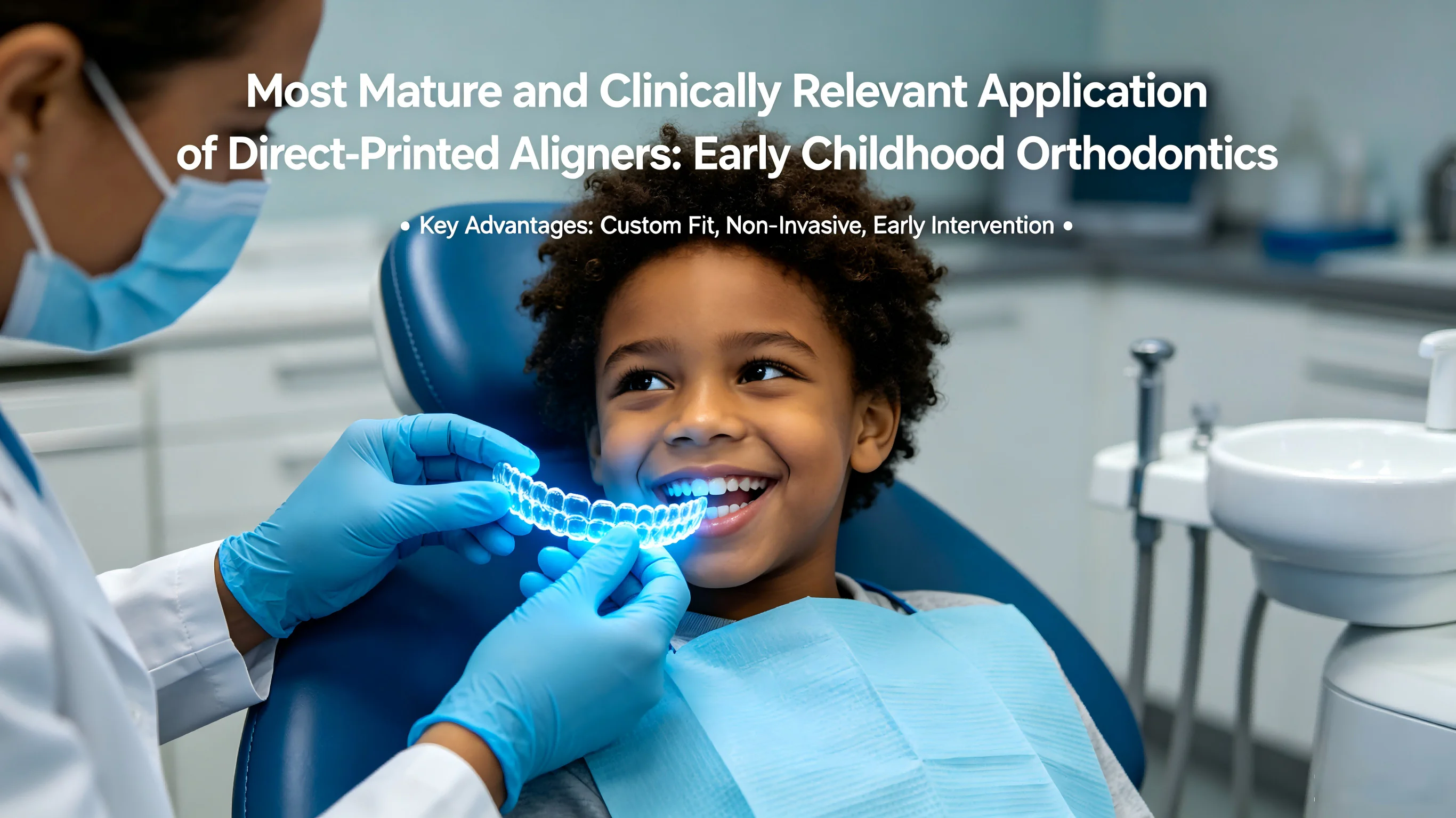
Given the technical characteristics and current market availability, the most mature and clinically relevant application of direct‑printed aligners is early childhood orthodontics.
First, children are in a stage of craniofacial growth and development, where complex heavy forces are rarely needed. Instead, functional guidance and light forces predominate. The mechanical performance of direct‑printed materials is already sufficient for most pediatric cases. Moreover, the treatment window in growing children is limited, so the rapid‑response chairside workflow itself has a clinical urgency—an advantage that applies to other settings as well.
Second, children are highly sensitive to intraoral discomfort. Direct printing can integrate traditionally complex functional components—such as bite blocks, myofunctional elements (e.g., lip bumpers, tongue cribs), and mandibular advancement guides—into a single, seamless aligner. This not only reduces fabrication complexity but also significantly improves pediatric compliance. Research has shown that direct printing can produce one‑piece functional appliances with twin bite blocks, elastic hooks, and inclined planes (ramps), achieving design freedom far beyond thermoforming.
Third, pediatric patients often require frequent follow‑up visits and are prone to losing or damaging aligners. Chairside same‑day printing allows clinicians to reprint or adjust a lost aligner during the visit, avoiding a week‑long wait that could lead to intraoral relapse and treatment interruption. This immediate‑response clinical capability holds irreplaceable value in pediatric orthodontic settings.
In addition, the two major selling points—attachment‑free functionality (via variable thickness and built‑in power ridges/pressure bumps) and easy chairside operation (full delivery within 2‑3 hours)—further strengthen the appeal of direct‑printed aligners in pediatric and early‑treatment scenarios.
Conclusion and Outlook
Today, direct‑printed clear aligners are not a wholesale replacement for thermoforming; rather, they represent a highly scenario‑specific complementary solution.
If you are treating complex adult cases requiring precise root movement, torque control, and high mechanical predictability, thermoforming remains the clinical gold standard.
If you focus on early childhood intervention, mild crowding, retainers, or if you value single‑visit chairside delivery, simplified workflows, and attachment‑free operation, direct printing offers an increasingly attractive alternative.
As companies like LuxCreo and Graphy continue to push the physical limits of high‑strength printing resins—the former through hot‑water‑activated shape‑memory polymers, the latter through spontaneous shape recovery at oral temperature—the performance gap between direct printing and thermoforming is steadily narrowing. Meanwhile, the entry of more players means greater material diversity and ongoing cost optimization. At this stage, the key clinical decision is not to declare one technology universally superior, but to match the right solution to each case—balancing case complexity, practice efficiency, and patient needs to make the best choice for every chair.