Nicht jedes Lächeln ist gleich
Wenn die meisten Menschen an durchsichtige Aligner denken, stellen sie sich Erwachsene vor, die diskret ihre Zähne korrigieren lassen. Doch mittlerweile kommen immer mehr Kinder und Jugendliche für eine unsichtbare kieferorthopädische Behandlung in Frage. Hier liegt die Herausforderung: Kinder und Jugendliche sind nicht einfach nur kleine Erwachsene. Ihre Kiefer wachsen noch, die Zähne brechen noch durch, und ihre Zahnanatomie verändert sich von Monat zu Monat. Das bedeutet, dass die für sie entwickelten Aligner ganz anders funktionieren müssen als diejenigen, die für den vollständig entwickelten Mund eines Erwachsenen hergestellt werden.
In diesem Artikel werden wir untersuchen, warum Patienten im Wachstum einen grundlegend anderen Ansatz bei der Behandlung mit transparenten Alignern benötigen und wie modernste, direkt im 3D-Druck hergestellte Aligner, wie beispielsweise die von Graphy und LuxCreo, diesen besonderen Anforderungen gerecht werden – mit Eigenschaften, die herkömmliche, thermogeformte Aligner einfach nicht bieten können.
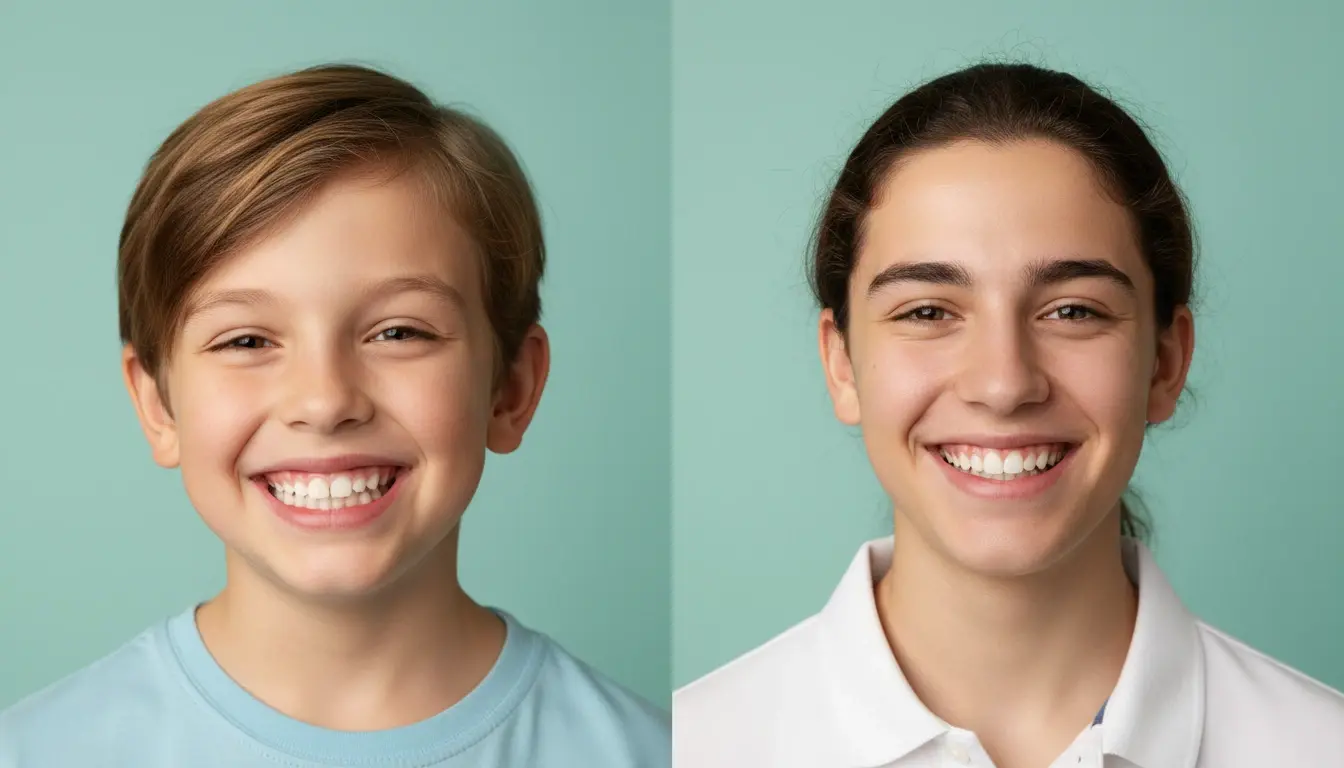
Der wachsende Mund: Ein bewegliches Ziel
Im Alter zwischen 6 und 14 Jahren durchläuft der Mund eines Kindes eine außergewöhnliche Veränderung. Die Milchzähne fallen aus, die bleibenden Zähne brechen durch, und der Kieferknochen selbst dehnt sich aus und formt sich neu. Bis ein Teenager 16 Jahre alt ist, kann sich sein Zahnbogen mehrfach in Größe und Form verändert haben. Dies schafft ein einzigartiges kieferorthopädisches Umfeld, in dem die Behandlung den kontinuierlichen biologischen Veränderungen Rechnung tragen muss.
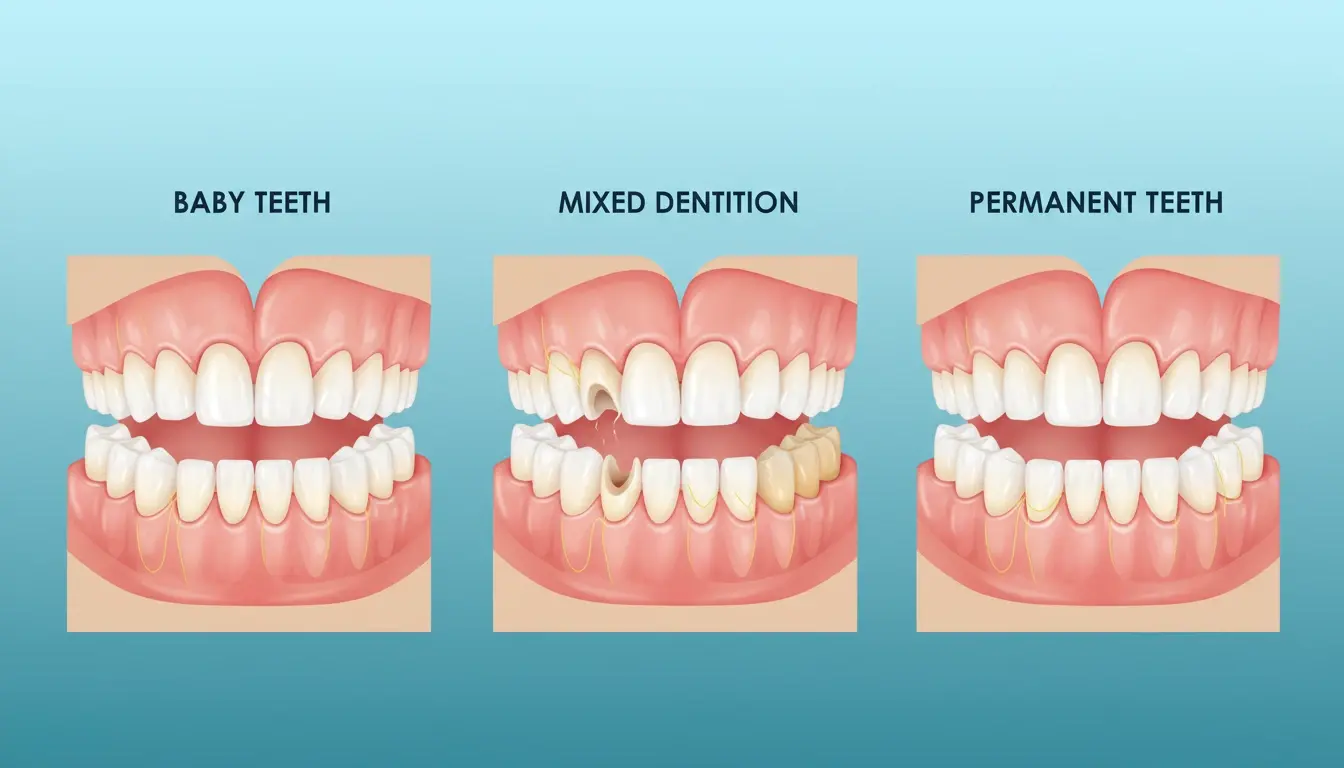
Was zeichnet Fälle in der Kinderheilkunde aus?
Kieferorthopädische Fälle bei Erwachsenen sind relativ stabil. Die Kieferknochen sind ausgewachsen, die Zahnstellungen sind feststehend, und das Behandlungsziel besteht in erster Linie darin, die vorhandenen Zähne neu zu positionieren. Bei Kindern und Jugendlichen müssen Kieferorthopäden jedoch Folgendes berücksichtigen:
• Wechselgebiss: Eine Kombination aus Milchzähnen und bleibenden Zähnen, die gleichzeitig vorhanden sind und Aligner erfordern, die auf Zähne mit sehr unterschiedlichen Größen und Formen passen.
• Aktives Kieferwachstum: Ober- und Unterkiefer befinden sich noch in der Entwicklung, was bedeutet, dass sich die Zahnschiene an die sich verändernden Zahnbogenmaße anpassen muss, anstatt ihnen entgegenzuwirken.
• Durchbruch der Zähne: Es brechen ständig neue Zähne durch, und die Aligner müssen diesem Durchbruchprozess Rechnung tragen oder ihn sogar lenken, anstatt lediglich bereits vollständig durchgebrochene Zähne zu bewegen.
• Verhaltensfaktoren: Bei jüngeren Patienten kann es zu Problemen bei der Therapietreue kommen, wodurch herausnehmbare Aligner sowohl einen Vorteil (hinsichtlich der Hygiene) als auch eine Herausforderung (hinsichtlich des konsequenten Tragens) darstellen.
Was wachsende Lächeln von Alignern brauchen
Diese biologischen Gegebenheiten führen zu spezifischen technischen Anforderungen an transparente Zahnspangen für Kinder und Jugendliche, die sich erheblich von denen bei Erwachsenen unterscheiden:
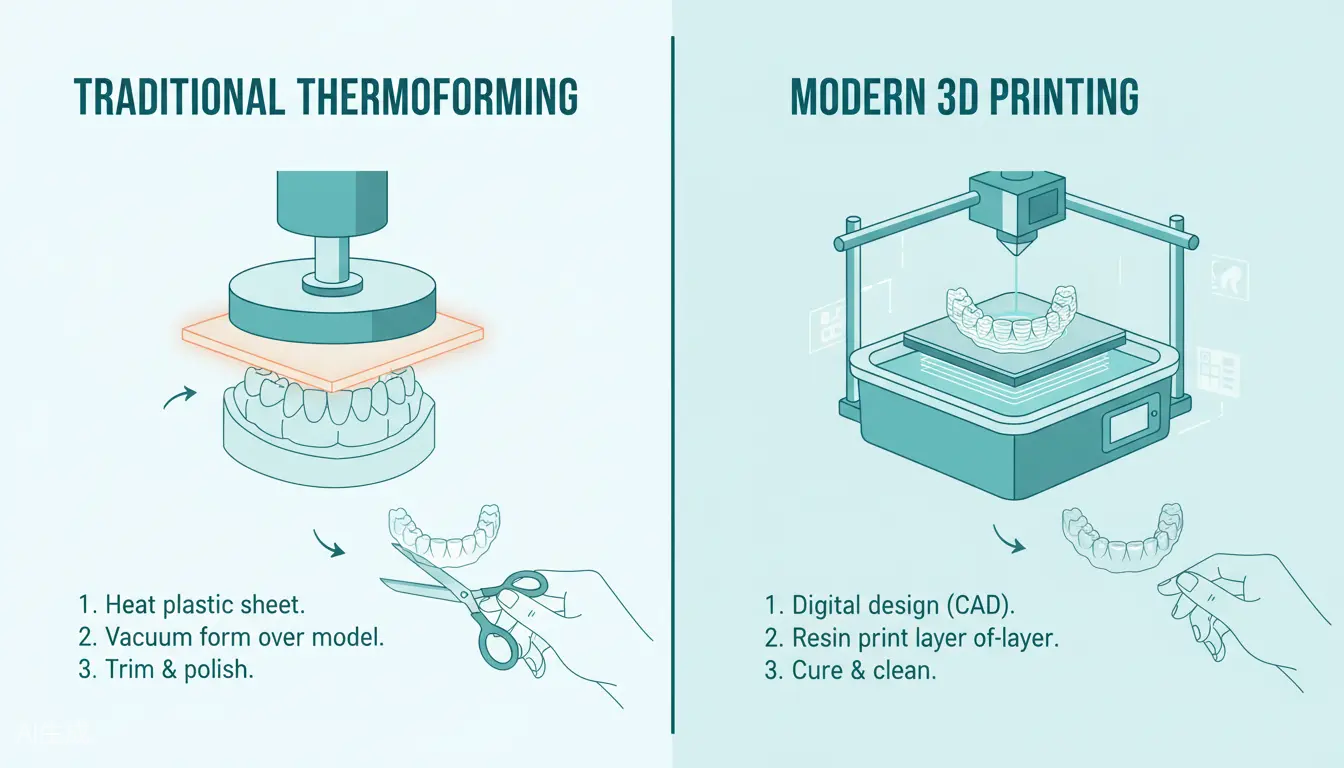
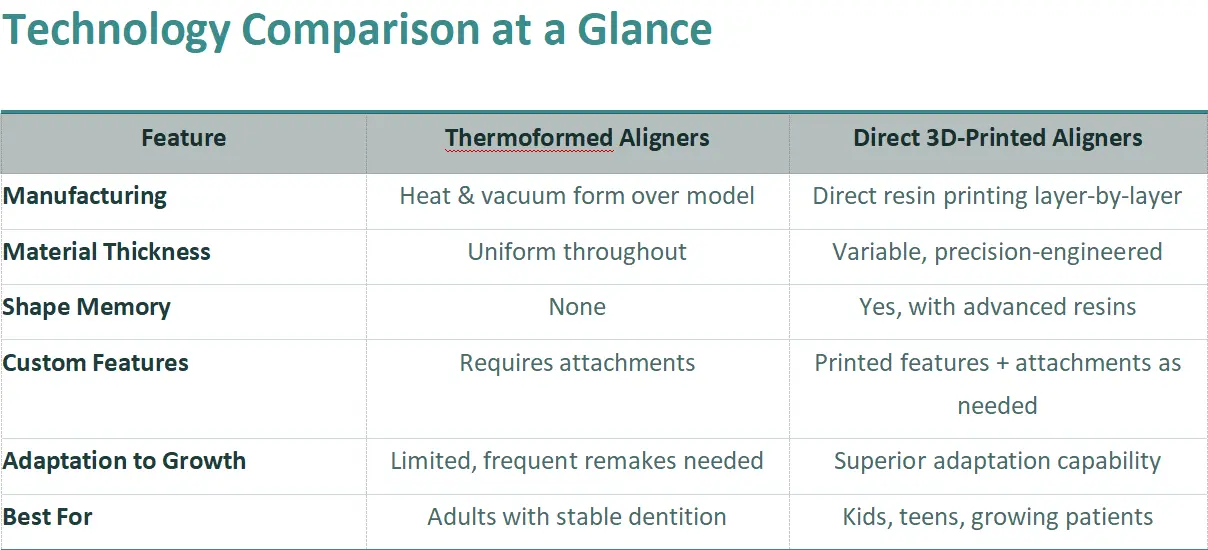
Herkömmliche thermogeformte Aligner, die durch Erhitzen einer Kunststofffolie und Vakuumformen über einem 3D-gedruckten Zahnmodell hergestellt werden, wurden speziell für das Gebiss von Erwachsenen entwickelt. Sie eignen sich hervorragend, um präzise Kräfte auszuüben und die Zähne in einem stabilen Zahnbogen zu bewegen. Bei Patienten im Wachstum zeigen sich ihre Grenzen jedoch schnell. Zwar haben moderne Mehrschichtfolien die mechanische Vielseitigkeit verbessert, doch ist der Thermoformprozess nach wie vor grundlegend durch das vorgeformte Folienmaterial eingeschränkt. Dies schränkt die Möglichkeit ein, lokale Dickenschwankungen oder integrierte geometrische Merkmale mit derselben Freiheit wie beim direkten Druck zu gestalten, was die Anpassung an durchbrechende Zähne oder sich verändernde Zahnbogenformen erschwert.
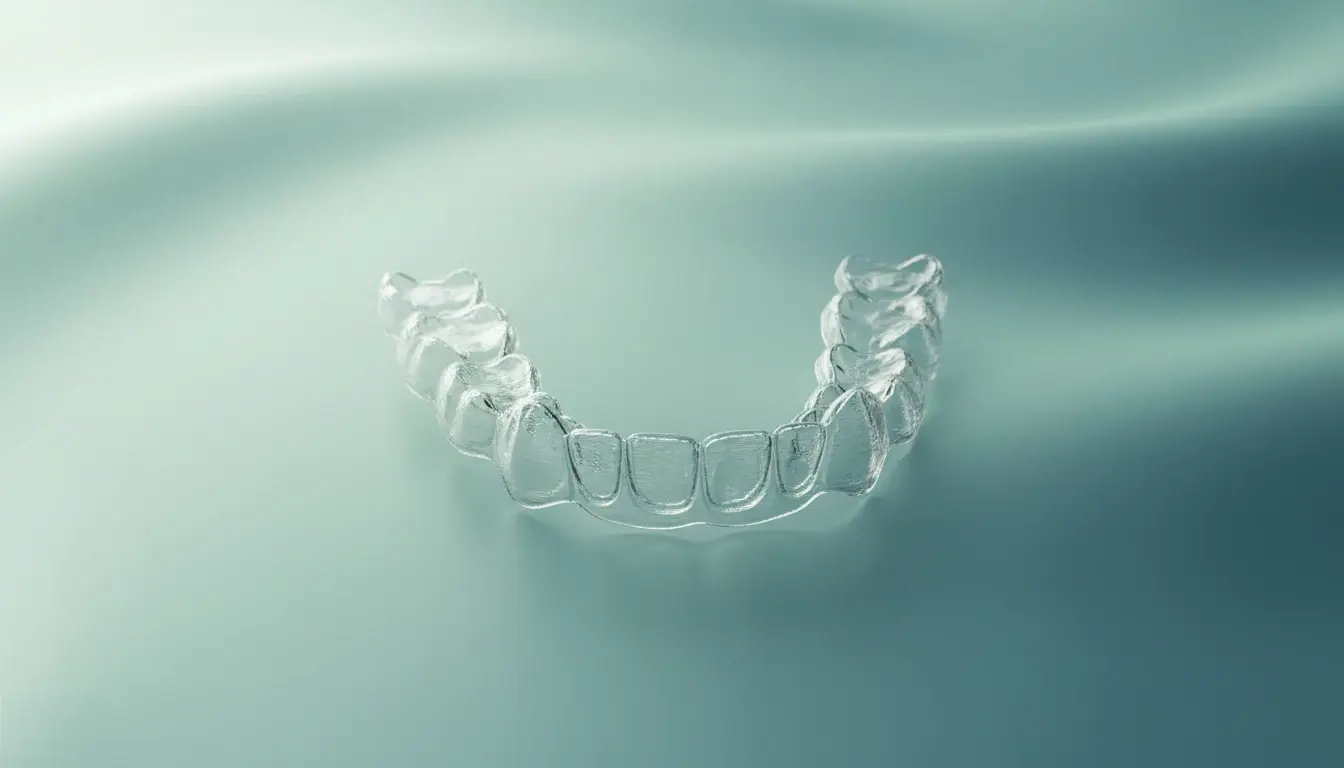
Die Revolution des Direct-3D-Drucks
Hier kommen direkt gedruckte, transparente Aligner ins Spiel – eine Technologie, die den Thermoformungsschritt vollständig umgeht. Anstatt Kunststoff über einem Modell zu formen, werden diese Aligner direkt aus digitalen Entwürfen mit Hilfe moderner, harzbasierter 3D-Drucker gedruckt. Graphy hat mit seinem direkt gedruckten Harz TC-85, das für außergewöhnliche optische Klarheit und Druckpräzision bekannt ist, Pionierarbeit bei diesem Ansatz geleistet. LuxCreo hat unterdessen mit der 4D-Aligner-Technologie, die zeitabhängige intelligente Materialien einbezieht, die Grenzen weiter verschoben. Beide Ansätze bieten deutliche Vorteile, die insbesondere für jüngere Patienten relevant sind.
Formgedächtnis: Gleichmäßige Kraft durch intelligente Werkstoffe
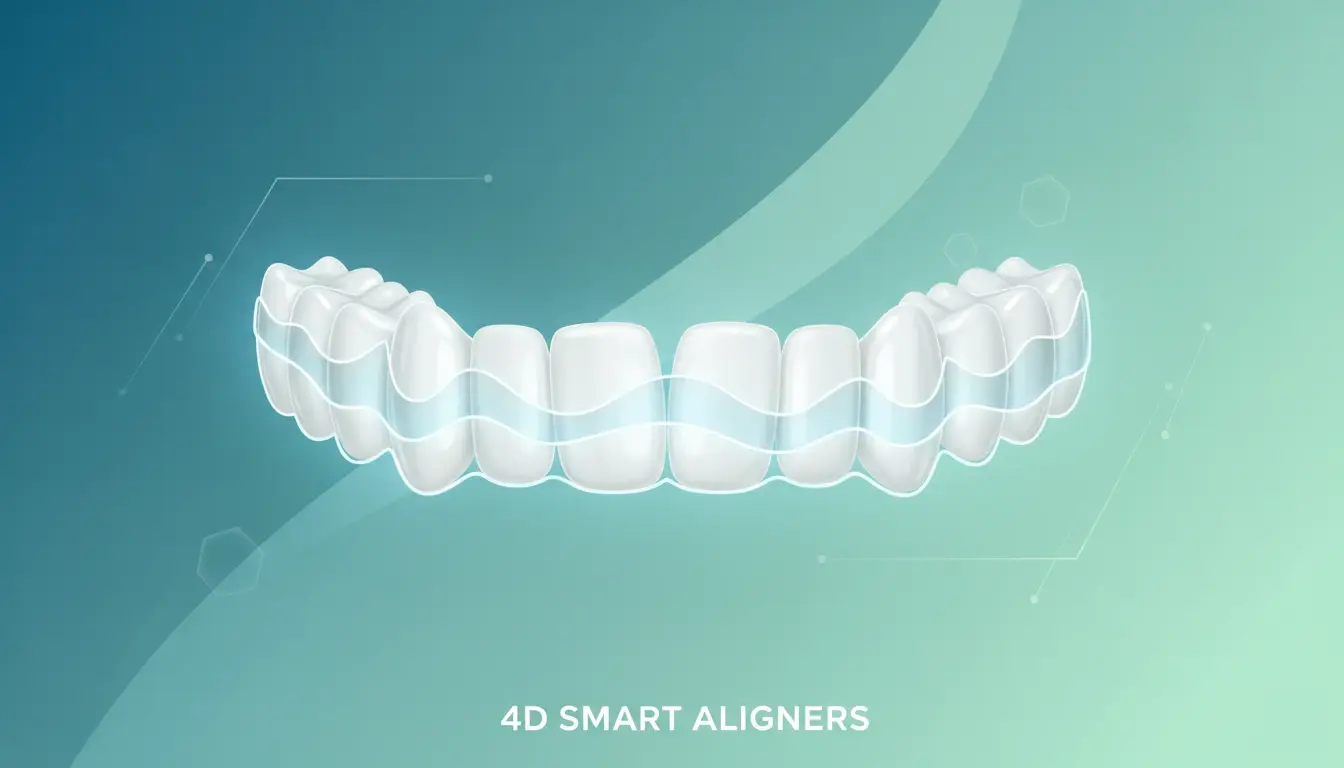
Eine der spannendsten Materialinnovationen im Bereich der direkt gedruckten Aligner stammt aus der 4D-Drucktechnologie, wie sie beispielsweise in der Smart-Aligner-Plattform von LuxCreo zum Einsatz kommt. Herkömmliche thermogeformte Aligner, die in der Regel aus PETG oder Polyurethan bestehen, verhalten sich wie eine starre Schale. Im Laufe der Tragezeit verlieren diese Materialien allmählich ihre mechanische Wirkung, da sie sich unter konstanter Belastung verformen, was zu einer nachlassenden Korrekturkraft führt.
Im Gegensatz dazu können moderne, im 4D-Druck hergestellte Aligner-Harze Formgedächtniseigenschaften aufweisen, d. h. die Fähigkeit, nach einer Verformung wieder in eine vorprogrammierte Form zurückzukehren. Anstatt zuzulassen, dass sich die Zahnschiene im Laufe der Tragezeit lockert, trägt dieses Materialverhalten dazu bei, eine gleichmäßigere Korrekturkraft über jede Behandlungsphase hinweg aufrechtzuerhalten. Es ist wichtig zu beachten, dass sich der Begriff „Formgedächtnis“ auf die gleichbleibende Kraft innerhalb einer bestimmten Zahnschienenphase bezieht und nicht auf eine automatische Anpassung an langfristiges Kieferwachstum oder den Zahndurchbruch, was nach wie vor eine geplante Abfolge der Zahnschienen und klinische Überwachung erfordert.
Geringere Abhängigkeit von Befestigungen durch aufgedruckte Merkmale
Ein weiterer bedeutender Vorteil von direkt gedruckten Alignern für Kinder und Jugendliche ist die geometrische Freiheit, präzisionsgefertigte Elemente direkt in den Aligner-Körper zu integrieren. Herkömmliche Aligner sind in der Regel auf zahnfarbene Attachments angewiesen, die an den Zähnen befestigt werden, um Halt zu bieten und Rotations- oder Extrusionskräfte auszuüben. Zwar verwenden viele direkt gedruckte Aligner-Systeme, darunter auch das von Graphy, für komplexe Bewegungen nach wie vor Attachments, doch ermöglicht die Technologie gedruckte Druckpunkte, individuell angepasste Griffzonen und Bereiche mit variabler Dicke, wodurch in bestimmten Fällen die Abhängigkeit von Attachments verringert werden kann.
Dies ist insbesondere für Patienten im Wechselgebiss von Bedeutung, bei denen das Anbringen von Attachments an Milchzähnen oder teilweise durchgebrochenen bleibenden Zähnen technisch schwierig und weniger zuverlässig sein kann. Durch die direkte Integration der funktionellen Geometrie in die gedruckte Zahnschiene können Zahnärzte eine kontrollierte Krafteinleitung auch in Situationen erreichen, in denen das Anbringen herkömmlicher Attachments erschwert ist.
Variable Dicke und Präzisionstechnik
Der Direktdruck ermöglicht zudem etwas, was beim Thermoformen nicht möglich ist: eine wirklich variable Dicke über den gesamten Aligner-Körper hinweg. Eine gedruckte Zahnschiene kann in Bereichen, in denen mehr Kraft aufgewendet werden muss, dicker und in empfindlichen Bereichen dünner sein – und das alles in einem einzigen, nahtlosen Stück. Dank dieser technischen Präzision lässt sich die Behandlung in jeder Phase optimal an die spezifischen biomechanischen Anforderungen jedes einzelnen Zahns anpassen – ein Maß an Kontrolle, das besonders wertvoll ist, wenn es darum geht, durchbrechende Zähne in die richtige Position zu führen.
Die Zukunft ist gedruckt
Im Zuge der kontinuierlichen Weiterentwicklung der Kieferorthopädie wird die Unterscheidung zwischen Aligner-Behandlungen bei Erwachsenen und Kindern immer deutlicher. Für Patienten im Wachstum sind Aligner erforderlich, die speziell auf ihr Entwicklungsstadium zugeschnitten sind und den besonderen Herausforderungen des Wechselgebisses sowie der aktiven Kieferentwicklung gerecht werden.
Direkt im 3D-Druck hergestellte transparente Aligner bringen bedeutende Innovationen in diesen Bereich: Formgedächtniswerkstoffe für eine gleichmäßigere Kraftausübung, geometrische Freiheit zur Verringerung der Abhängigkeit von Befestigungspunkten in bestimmten Fällen sowie präzisionsgefertigte variable Wandstärken für eine optimierte biomechanische Steuerung. Für Eltern, die eine kieferorthopädische Behandlung für ihre Kinder in Betracht ziehen, und für Zahnärzte, die jüngere Patienten behandeln, bieten diese Aligner der nächsten Generation einen echten Mehrwert: eine Technologie, die die nötige Präzision und Flexibilität bietet, um ein sich entwickelndes Lächeln auf wunderschöne Weise in die richtige Position zu führen.
Die Zukunft der kieferorthopädischen Behandlung mit transparenten Alignern bei Kindern ist nicht nur unsichtbar. Sie ist intelligent, anpassungsfähig und perfekt im 3D-Druck gefertigt.