1. Por qué es importante contar con el socio de formación adecuado para tu empresa
El sector de los alineadores transparentes está experimentando un rápido crecimiento en Europa, el Sudeste Asiático, Oriente Medio y las Américas. Cada vez son más los emprendedores y los profesionales clínicos que lanzan marcas locales de alineadores, crean laboratorios de diseño propios o amplían la producción de productos de ortodoncia. Sin embargo, persiste un cuello de botella habitual: la grave escasez de diseñadores cualificados de alineadores.
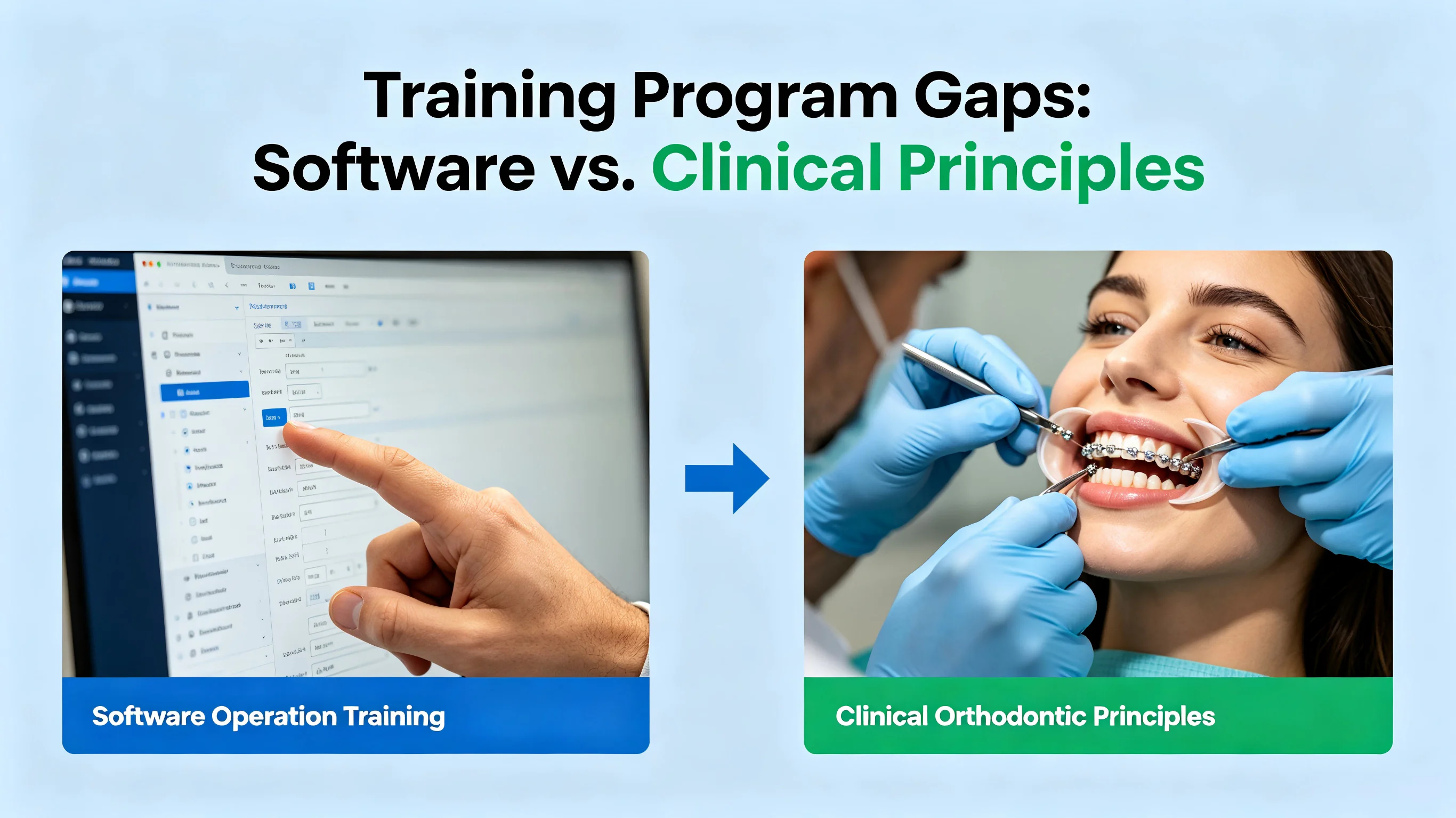
Muchos programas de formación se limitan a enseñar cómo manejar el software, sin tener en cuenta los principios clínicos de la ortodoncia que determinan el éxito o el fracaso. El resultado son elevadas tasas de retoques, resultados clínicos deficientes y una reputación profesional dañada.
Para crear un negocio sostenible de alineadores transparentes, necesitas un socio de formación que vaya más allá de la simple demostración del software. Este artículo ofrece un marco práctico para seleccionar un centro de este tipo, seguido de dos ejemplos contrastados de China que ilustran en qué consiste la excelencia.
2. Criterios clave para seleccionar un socio de formación en diseño de alineadores transparentes
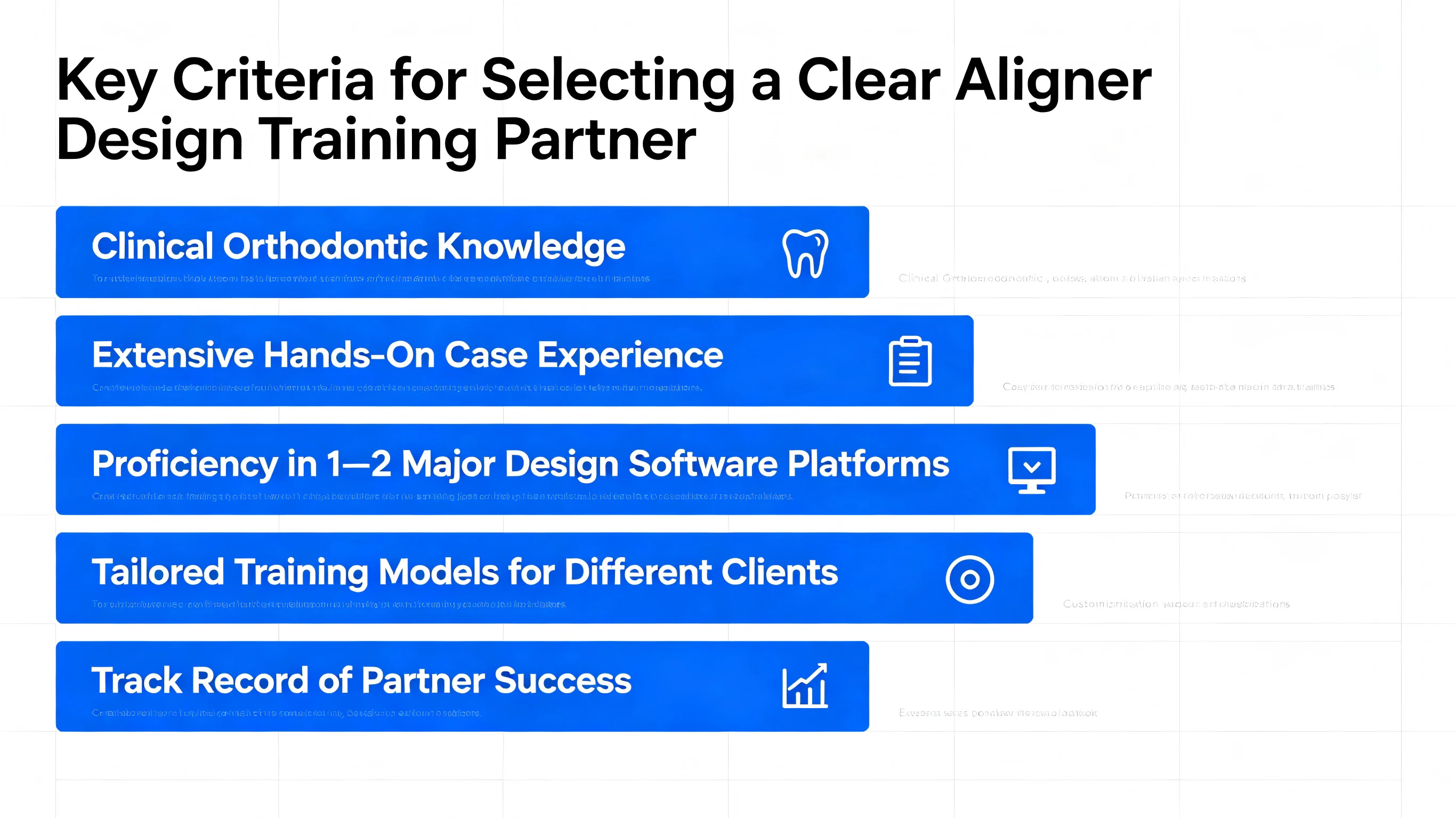
A la hora de evaluar a un posible compañero de entrenamiento, hazte estas cinco preguntas:
2.1 Conocimientos clínicos de ortodoncia
¿La formación va más allá del modelado digital? Un buen centro enseña biomecánica, principios de fijación, estrategias de sobrecorrección, lógica de las fases de tratamiento y límites en la selección de casos. Los diseñadores deben comprender por qué un diente se mueve de la forma en que lo hace, y no solo cómo organizar las fases del tratamiento en el software.
Busca: formadores que cuenten con formación específica en ortodoncia o que colaboren estrechamente con ortodoncistas con experiencia.
2.2 Amplia experiencia práctica con casos reales
La teoría no sirve de nada sin la práctica en el mundo real. El centro debería haber tratado miles de casos de complejidad moderada a alta (extracciones, apiñamiento grave, mordidas abiertas, mordidas profundas, rotaciones asimétricas, etc.). La experiencia enseña a los diseñadores qué es lo que falla y cómo evitar los ciclos de refinamiento.
Busca: Número de casos documentados, preferiblemente más de 5.000 diseños finalizados, incluyendo maloclusiones complejas.
2.3 Dominio de 1 o 2 plataformas principales de software de diseño
El centro debe dominar las herramientas estándar del sector (por ejemplo, 3Shape, uDesign, OrthoAnalyzer) o el software avanzado basado en inteligencia artificial. Sin embargo, el dominio del software por sí solo no es suficiente: debe ir acompañado de criterio clínico.
Busca: una formación que abarque al menos un programa de software convencional y, a ser posible, funciones de diseño asistidas por IA para mejorar la eficiencia.
2.4 Modelos de formación a medida para distintos clientes
Tu modelo de negocio determina qué tipo de formación necesitas:
Odontólogos a título individual o en pequeños grupos: necesitan una inmersión clínica profunda y, posiblemente, apoyo para el análisis de casos.
Marcas de alineadores transparentes: se necesitan diseñadores de líneas de producción que trabajen con rapidez y de forma constante.
Laboratorios de ortodoncia: necesitan formación sobre integración de flujos de trabajo y control de calidad.
Consultas especializadas en alineadores dentales: requieren eficiencia en el diseño en la consulta y resolución de problemas clínicos.
Un buen centro de formación ofrece programas modulares o personalizados, no un curso único para todos.
2.5 Historial de éxitos de los socios
Pide referencias, datos sobre los resultados de los casos y las tasas de perfeccionamiento de sus titulados. ¿Pueden demostrar una mejora en la calidad del diseño y una reducción de las correcciones a mitad de proyecto?
3. Dos características que definen a un centro de formación en diseño de alineadores transparentes de excelencia: con ejemplos de China
En todo el mundo, los centros de formación en diseño de alineadores transparentes más eficaces comparten dos puntos fuertes fundamentales:
Amplia experiencia práctica en el diseño de alineadores, especialmente para casos moderados y complejos (extracciones, apiñamiento grave, mordidas abiertas, mordidas profundas, rotaciones asimétricas, etc.).
Alto dominio de 1 o 2 plataformas de software de diseño de alineadores transparentes, lo que permite a los diseñadores plasmar los planes clínicos en movimientos dentales digitales precisos y divididos en etapas.
Estas dos características son imprescindibles. Un centro que carezca de un volumen suficiente de casos reales formará a diseñadores que se pondrán nerviosos ante una maloclusión atípica. Un centro que no domine el software del sector formará a diseñadores lentos e ineficaces, incapaces de integrarse en los flujos de trabajo digitales modernos.
3.1 Por qué es importante la experiencia práctica con casos de complejidad moderada y alta
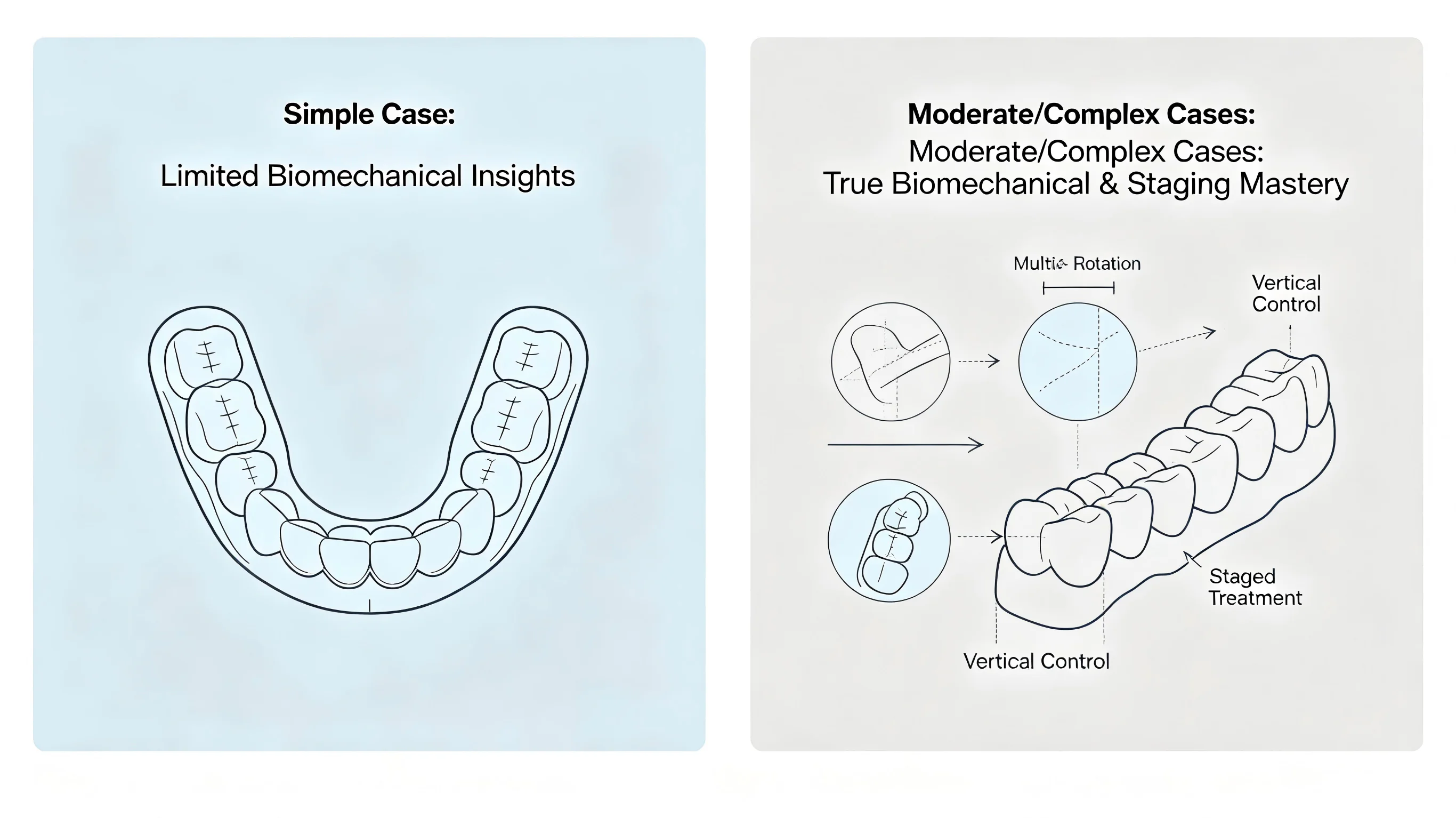
Los casos sencillos de alineadores transparentes (espaciación leve, apiñamiento menor) aportan poca información sobre los límites del tratamiento con alineadores. Son los casos moderados y complejos —extracciones de premolares, rotaciones de 4-5 mm, mordidas profundas graves, mordidas abiertas anteriores, formas asimétricas de la arcada— los que revelan si un diseñador comprende realmente la biomecánica y la planificación por fases. Un centro de formación que haya tratado miles de casos de este tipo puede enseñar a los alumnos qué funciona, qué lleva a tener que realizar correcciones a mitad del tratamiento y cómo anticipar un posible fracaso antes incluso de imprimir el primer alineador.
3.2 Por qué es importante la fluidez en el uso del software (pero solo como herramienta)
El dominio de programas como 3Shape, uDesign o plataformas basadas en inteligencia artificial es esencial para garantizar la eficiencia y la precisión. Sin embargo, los centros de formación de excelencia enseñan a utilizar el software como una herramienta, no como un fin en sí mismo. Los alumnos aprenden a utilizar las funciones del software (colocación de fijaciones, intervalos de preparación, ajustes de sobrecorrección) para llevar a cabo un plan clínicamente sólido, y no para generar una segmentación atractiva carente de lógica clínica.
3.3 Dos centros chinos que ejemplifican estas características
El mercado chino de alineadores transparentes, altamente competitivo, ha dado lugar a centros de formación que reúnen ambas ventajas mencionadas anteriormente. Dos ejemplos destacados son:
Centro de Ortodoncia DSmilife – Fundada por ortodoncistas de la Facultad de Estomatología de China Occidental (Huaxi), DSmilife aporta una profunda experiencia clínica en ortodoncia y una amplia experiencia práctica en casos reales. Su formación combina el razonamiento clínico con el dominio de las herramientas informáticas, lo que la convierte en un referente sólido sobre cómo debe funcionar un centro orientado a la práctica clínica.
Best Smile Tech – Un laboratorio ortodóntico pionero en alineadores transparentes OEM en China, fundado por ortodoncistas y diseñadores de alineadores transparentes con amplia experiencia en el diseño de este tipo de aparatos. Han tratado más de 30 000 casos de complejidad moderada y alta, y han desarrollado conjuntamente con sus socios un software de diseño potenciado por IA. Su programa de formación en diseño de alineadores transparentes se ofrece actualmente solo a sus socios (marcas de alineadores transparentes, laboratorios de ortodoncia y consultas) y no está disponible como curso público independiente. Este modelo demuestra cómo una amplia experiencia en casos, el dominio del software y un enfoque de formación exclusivo para socios pueden generar capacidades de diseño altamente fiables y escalables.
Estas dos organizaciones no son los únicos centros de excelencia que hay en el mundo, pero sirven como puntos de referencia útiles. Cuando evalúes a cualquier socio de formación —ya sea de tu mercado local o del extranjero—, pregúntate: ¿Tienen la misma experiencia en casos prácticos? ¿Dominan realmente el software que voy a utilizar?
4. Conclusión
Elegir un socio de formación en el diseño de alineadores transparentes es una decisión estratégica que influye directamente en los resultados de tus tratamientos, en las tasas de retoque y en la reputación de tu consulta. No te conformes con cursos que solo enseñen a hacer clics en el software. Exige conocimientos clínicos de ortodoncia, amplia experiencia en casos, dominio del software y un modelo de formación que se adapte a tu consulta.
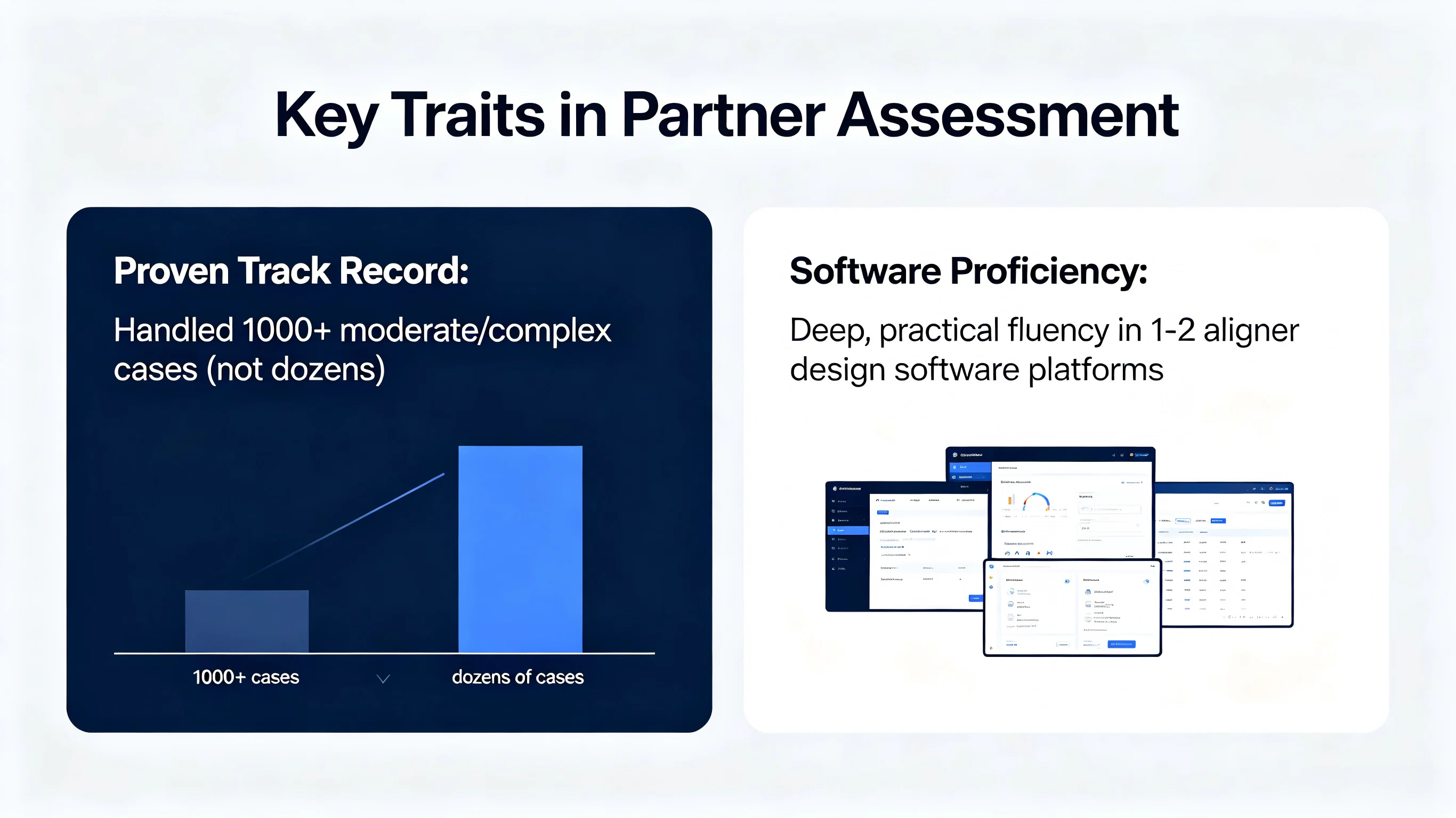
A la hora de evaluar a una posible pareja, presta especial atención a dos rasgos imprescindibles:
Experiencia demostrada en la gestión de casos de complejidad moderada y elevada (miles, no docenas)
Conocimiento profundo y práctico de 1 o 2 plataformas de software de diseño de alineadores
El Centro de Ortodoncia DSmilife de China y Best Smile Tech son un ejemplo de cómo se ponen en práctica estas características: uno se basa en la autoridad clínica y el otro, en la experiencia de un laboratorio OEM a escala industrial y en una formación centrada en los socios. Utiliza sus modelos como guía de referencia. El socio de formación adecuado no solo enseñará a tu equipo a diseñar alineadores, sino que les enseñará a diseñar tratamientos exitosos.