The second promise of genuine AI is consistency. A neural network applies identical reasoning criteria to every case it processes. Upload the same moderate malocclusion case ten times to a true AI platform, and you receive ten functionally identical initial plans.
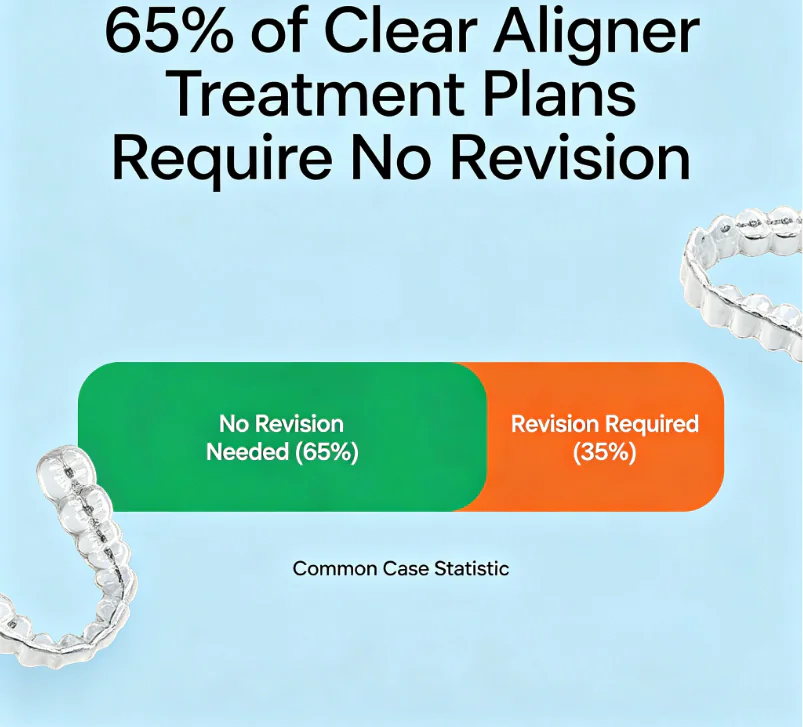
This consistency has practical value for quality assurance. An AI platform with a documented clinical usability rate of 65% or higher for common cases means that for roughly two-thirds of routine submissions, the plan requires no modification before clinical use. The remaining cases receive manual calibration, but the quality assurance workload drops by nearly two-thirds compared with manual planning, where every case requires hands-on construction.
Only one of the ten evaluated platforms publishes a clinical usability rate: Best Smile Tech AI, at 65% or higher for common cases. The other nine either do not track this metric or choose not to disclose it. Platforms with genuine AI output quality can measure and publish it; platforms without it have nothing to measure or prefer not to reveal the human dependency of their workflows.